
The Significance of the Saffron Colour at Ajmer Sharif Dargah
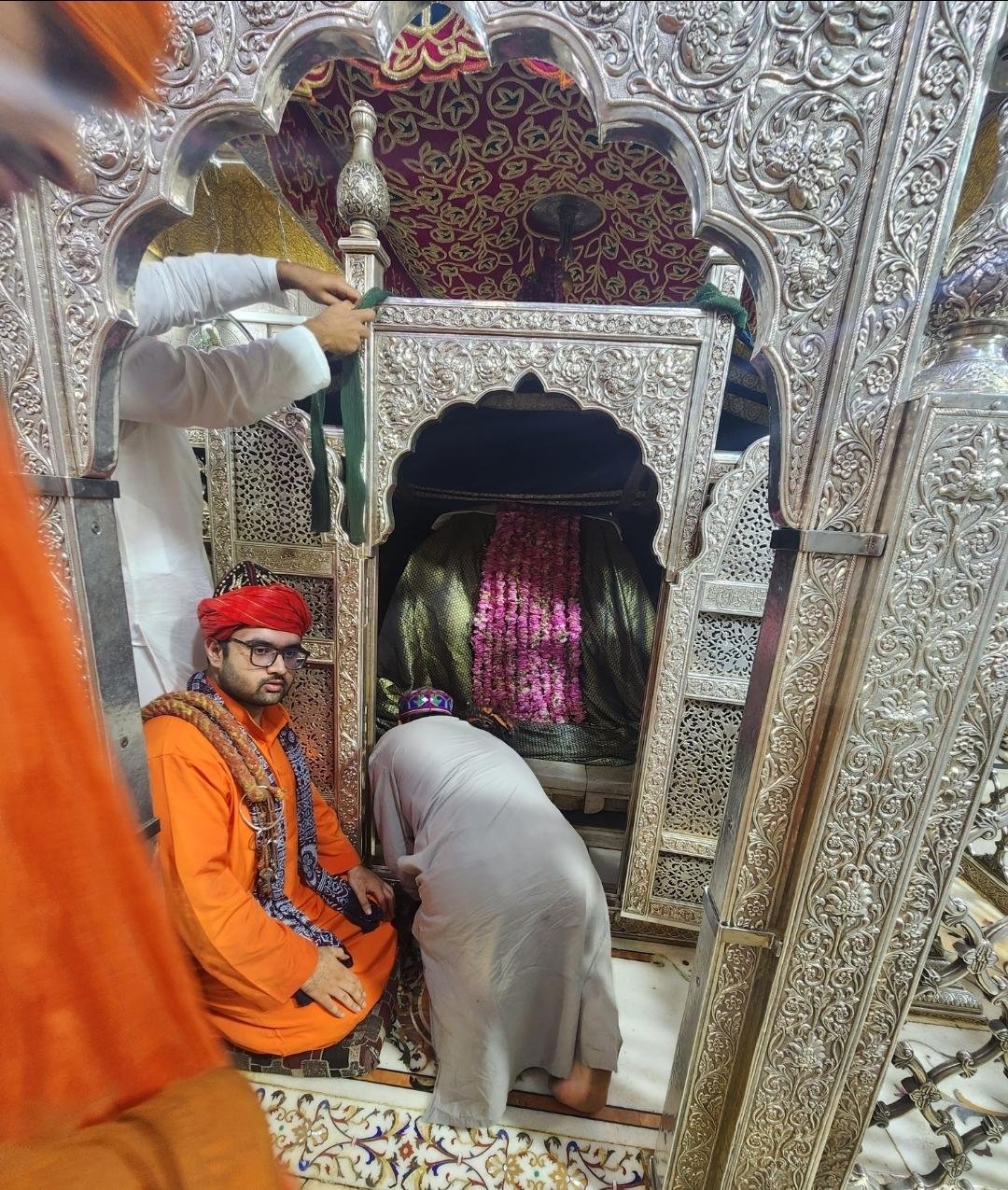
Syed Layaque Hussain Aghai, Gaddinashin of Dargah Sharif, Ajmer, holding the sacred Gaddi at Astana-e-Aliya, Dargah Ajmer Sharif, following the Khidmat-e-Mazar-e-Aqdas of Sarkar Khwaja Gharib Nawaz (R.A.)
The saffron colour holds a special place of respect and spiritual significance in the traditions associated with the sacred Darbar of Hazrat Khwaja Moinuddin Hasan Chishti (R.A.), lovingly known as Khwaja Gharib Nawaz. According to the traditions associated with the Darbar, this colour is connected with the spiritual life and attire of Khwaja Sahib and the Chishti Sufi saints, who are remembered for their devotion, humility, simplicity, and love for humanity.
Saffron-coloured garments and turbans have a significant place in the traditional attire associated with Chishti Sufi elders. Following the legacy of Khwaja Gharib Nawaz (R.A.), this colour has also retained particular importance among the Khadims of Ajmer Sharif. When Khadims enter the sacred inner area of the Mazar to perform their traditional duties of service, they wear saffron-coloured jubbas or kurtas and tie turbans around their heads. This traditional attire reflects their connection with the spiritual heritage of the Darbar and their commitment to carrying out their responsibilities with respect, dignity, and devotion.
The significance of saffron at Ajmer Sharif can also be understood through its association with India’s diverse spiritual and cultural traditions. Saffron-coloured clothing is worn by Hindu priests and is also associated with renunciation, sacrifice, spiritual discipline, and devotion in various Indian traditions. The presence of this colour in different religious settings offers a meaningful reminder of the cultural connections that can bring communities closer together.
The spiritual legacy of Khwaja Gharib Nawaz (R.A.) is widely associated with love, compassion, generosity, and respect for every human being. His message continues to inspire people from different religions and communities to visit Ajmer Sharif, offer their prayers, and experience an atmosphere of peace and brotherhood. The significance of saffron-coloured attire among the Khadims, alongside the broader cultural associations of this colour, can serve as a symbol of the shared heritage and mutual respect that characterise India’s spiritual diversity.
Above all, the traditions of Ajmer Sharif remind us that true spirituality is expressed through love, service, humility, and humanity. The enduring reverence for Khwaja Gharib Nawaz (R.A.) transcends religious and social boundaries, bringing people together through a common desire for peace, harmony, and goodwill.
The message of Khwaja Gharib Nawaz (R.A.) is a message of unity, not division; love, not hatred; and humanity, not discrimination. The saffron-coloured attire associated with the Darbar’s traditions provides an opportunity to reflect on this inclusive spiritual legacy and the importance of preserving the bonds of brotherhood among people of all faiths.