
Jhalra – The Sacred Historic Water Reservoir of Ajmer Sharif Dargah
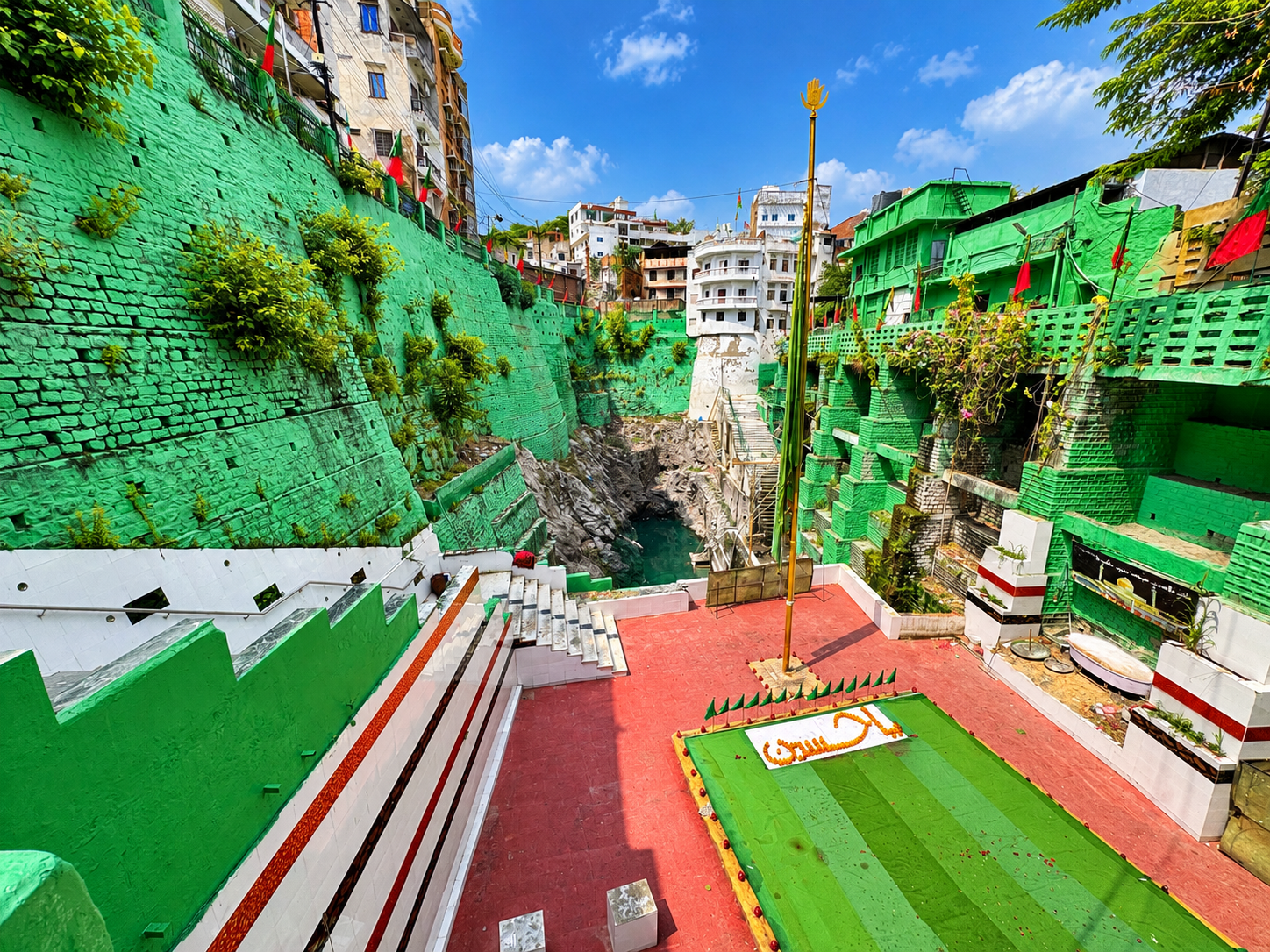
*JHALRA*
The Historic Water Reservoir of Ajmer Sharif
Introduction
The Jhalra is one of the historic water structures associated with the Ajmer Sharif Dargah complex.
Unlike the grand mosques and monumental gateways, the Jhalra represents an essential but often overlooked aspect of shrine architecture: water management.
Water reservoirs were extremely important in historic Islamic religious complexes because they supported ablution, prayer, pilgrims and the everyday functioning of the institution.
What is Jhalra?
Jhalra is a historic water reservoir associated with the Dargah.
The word is used in Rajasthan for traditional water structures and reservoirs.
The Jhalra mentioned in connection with Ajmer Sharif appears in historical inscriptional evidence relating to the Shahjahani Masjid.
This is significant because the water facility was considered sufficiently important to be recorded alongside the mosque’s construction.
Who built the Jhalra?
The historical evidence is more complicated than the history of a royal mosque.
The Persian inscription associated with the Shahjahani Masjid refers to a reservoir of water that is identified with the Jhalra.
However, the available evidence does not allow us to confidently name an individual architect or builder of the reservoir.
Therefore, it should not be attributed to a particular architect without further primary documentation.
The sturdy boundary wall of Jhalra was built by Emperor Shah Jahan. Previously, during the rainy season, a stream from Garh Beetli (Taragarh) used to flow through here, which further downstream was called the Albu River. When Emperor Akbar built the city wall of Ajmer, he diverted this stream toward the Dargah Bazaar and built a dam on it. Shah Quli Khan, the Subedar of Ajmer, constructed his tomb at the mouth of the dam on the other side during his lifetime. During the reign of Alamgir, ₹2,620 was spent by the government to supply water from Jhalra to the Hauz (reservoir). Thousands of people are quenched by its water, and it is very deep. Pilgrims consider its water sacred (Tabarruk).
Water and religious life
Water has an essential role in Islamic religious practice.
Before salah, Muslims perform wudu, ritual ablution.
At a major shrine receiving pilgrims from different regions, access to water was therefore a fundamental practical requirement.
The existence of a historic reservoir demonstrates that the Dargah was not simply designed as a collection of monuments.
It was a functioning religious institution requiring water, food, accommodation, lighting and other facilities.
Connection with Shah Jahan
The Jhalra is particularly interesting because the Persian inscription of the Shahjahani Masjid refers to it.
This demonstrates that water infrastructure was part of the architectural and religious environment surrounding the mosque.
The relationship between mosque, reservoir and shrine illustrates the integrated nature of the Dargah complex.
Architecture of water
Traditional Indian water architecture often combines engineering with architectural beauty.
Reservoirs were designed to collect and retain water while also allowing people to reach the water conveniently.
In a historic pilgrimage centre such as Ajmer, such infrastructure would have had practical importance throughout the year.
More than a monument
The Jhalra should therefore be presented differently from the Shahjahani Masjid or Buland Darwaza.
It is not primarily an imperial monument.
Its significance lies in the history of water, pilgrimage, sanitation, religious practice and the everyday functioning of the Dargah.
This makes it especially valuable for understanding how Ajmer Sharif operated as a living institution.
Conservation
Historic water structures require careful conservation.
Modern drainage, water supply, construction and visitor movement can affect traditional reservoirs.
Conservation should therefore consider both the historical fabric and the original relationship between the water structure and the surrounding buildings.
Conclusion
The Jhalra represents an essential part of the hidden infrastructure of Ajmer Sharif.
While the names of individual architects or builders are not securely established, historical inscriptional evidence confirms the importance of the reservoir within the Dargah’s architectural environment.
It reminds us that the history of Ajmer Sharif is not only a history of emperors, mosques and gateways. It is also the history of the practical systems that enabled generations of pilgrims to worship, perform ablution, receive food and remain within the sacred precinct.
The Jhalra is therefore an important part of the living architectural heritage of Ajmer Sharif.