

What is Urs e Sharif? Meaning, Significance & Spiritual Traditions
What Is Urs Sharif?
Urs Sharif is traditionally observed as the annual commemoration of the passing of a Wali of Allah (R.A.). It is generally organised by the Khalifa, disciples, followers and devotees to remember the life, teachings, spiritual legacy and service of the saint.
- What Is Urs Sharif?
- How Urs Sharif Is Observed
- Historical Tradition Behind Urs
- Chadar and Sandal Procession
- Chadar at the Shrine
- Flowers, Sandal and Itr
- The Spiritual Significance of the Ghilaaf
- Status of the Awliya Allah
- Dua and Prayer: The Philosophy of Dua
- 1. Dua Is the Weapon of the Believer
- 2. Presence of the Heart
- 3. Dua May Be Made in Any Language
- 4. Salawat Before and After Dua
- 5. Repentance and the Rights of Others
- Ask Allah for Everything
- Why Are Some Duas Delayed?
- The Wisdom Behind Delayed Answers
- Every Dua Has Value
- Dua and Action
- The True Spirit of Dua
The word “Urs” literally means “wedding” in Arabic. The bride and groom are referred to as Aroos. In Sufi tradition, the passing of a Wali is therefore understood symbolically as a union with the Divine Beloved—Allah Almighty—after a lifetime spent yearning for His nearness.
The source tradition connects this understanding of Urs with a narration concerning the questioning of the deceased by Munkar and Nakir. According to the cited tradition, when a Wali successfully answers the questions concerning Allah, Islam and the Holy Prophet Muhammad ﷺ, he is told to rest peacefully like a bride awaiting reunion with the beloved.
Thus, the term Urs has come to signify not merely the anniversary of physical departure from this world, but the spiritual union of a lover with the Divine Beloved.
How Urs Sharif Is Observed
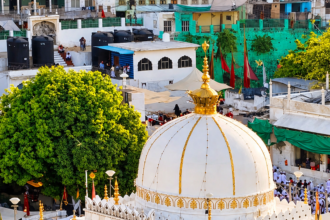
Every year, on or around the date or month in which the Wali departed from this world, Mureedeen, followers and devotees gather at the saint’s shrine. The observances may include:
- Recitation of the Holy Qur’an
- Zikrullah (remembrance of Allah)
- Khatm-e-Khwajagan
- Esaal-e-Sawaab for the spiritual reward to be conveyed to the departed
- Lectures and religious gatherings
- Salat-o-Salaam
- Recitation of Hamd, Naat and Manqabat
- Prayers and supplications
An Aalim may address the gathering and explain relevant Qur’anic verses, Ahadith and teachings concerning the Awliya Allah. The life of the Wali is presented as an example of faith, piety, sacrifice, devotion and service to humanity.
Devotees are encouraged to learn from the saint’s character and strive to adopt qualities such as Imaan, Taqwa, patience, generosity, humility and compassion.
Historical Tradition Behind Urs
According to the source material, the practice of visiting the graves of the righteous and martyrs is associated with the example of the Holy Prophet Muhammad ﷺ and the Khulafa-e-Rashideen.
It is narrated by Ibn Abi Shaybah that the Holy Prophet ﷺ would visit the graves of the martyrs of the Battle of Uhud and convey Salaam to them. The tradition further states that the four rightly guided Caliphs also continued this practice.
The source cites works including Fatawa Shaami, Tafseer-e-Kabeer and Durre Mansoor in connection with this tradition.
The source also refers to Shah Abdul Aziz Muhaddith of Delhi, son of Shah Waliullah, and his Fatawa Azizia, in which the gathering of people, recitation of the Holy Qur’an and distribution of Fatiha among those present are discussed.
Chadar and Sandal Procession
The Chadar and Sandal procession is a public devotional ceremony traditionally organised to express love, reverence and respect for a Wali of Allah. Devotees may prepare beautifully decorated trays containing:
- Ghilaaf or Chadar
- Flowers
- Itr (perfume)
- Niyaz
- Sandalwood paste or sandal powder
The trays are traditionally carried with respect during the procession. A Shaamiyana or ceremonial canopy may also be carried above the procession. Besides providing shelter from the sun or rain, it adds dignity and ceremonial character to the occasion.
During the procession, devotional poetry may be recited, including:
- Hamd — praise of Allah
- Naat — praise of the Holy Prophet Muhammad ﷺ
- Manqabat — praise of the Awliya Allah
- Salat-o-Salaam
- Zikrullah
The style and presentation of Urs processions may differ from one region or country to another according to local cultural traditions.
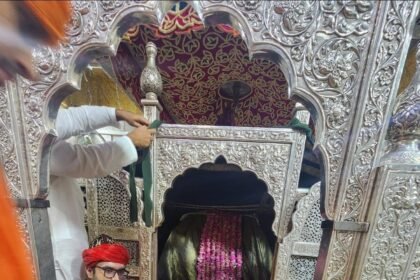
Chadar at the Shrine
The source describes placing a Chadar or Ghilaaf over the grave of a Wali as an expression of love, honour and respect. It refers to traditional accounts associated with Sayyida Ayesha Siddiqah (R.A.) and cites Baihaqi Shareef and Fatawa Shaami in discussing the practice.
According to the source, the Chadar is not regarded as an act of worship directed towards the grave. Rather, it represents reverence for the righteous servant of Allah and recognition of his spiritual legacy.
The source further states that Islamic jurists have discussed the practice of covering the graves of Awliya Allah with a Ghilaaf as an expression of love and respect.
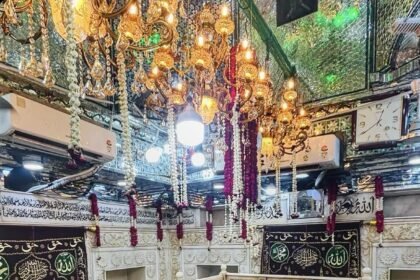
Flowers, Sandal and Itr
During Urs, the shrine may be decorated with flowers, while Sandal and Itr are traditionally offered or applied as expressions of reverence. The source associates the placing of fresh flowers and branches upon graves with a Sunnah and refers to Bukhari Shareef in this connection.
Itr is also used because perfume has a special place in Islamic devotional culture. The Holy Prophet Muhammad ﷺ is traditionally described as having loved perfume. In the context of Urs, the fragrance of Itr is intended to create an atmosphere of peace, serenity and devotion around the shrine.
The Spiritual Significance of the Ghilaaf
The source compares the covering of the graves of Awliya Allah with the tradition of covering sacred objects such as the Holy Qur’an and the Kaaba. It explains that the purpose of placing a Ghilaaf over the shrine is to express love for the Wali of Allah, respect for his spiritual legacy, recognition of his devotion and service, and remembrance of his closeness to Allah.
The sight of the covered shrine reminds devotees that the person resting there devoted his life to Allah and left behind a legacy of faith, service and spiritual guidance. The source also distinguishes this practice from the graves of ordinary Muslims and attributes this distinction to the views of certain Fuqaha.
Status of the Awliya Allah
“Thus, then, if he be of those nearest to Allah, for him is rest and satisfaction, and a Garden of Delights.”
— Surah Al-Waqi‘ah, 56:88–89
The verse is presented as a reminder of the honour and spiritual reward associated with those who attain closeness to Allah.
Dua and Prayer: The Philosophy of Dua
Dua is described as one of the greatest means through which a believer turns towards Allah. It represents humility, dependence upon the Creator and sincere expression of one’s hopes and needs. The source presents the following principles regarding Dua:
1. Dua Is the Weapon of the Believer
Dua is traditionally described as a believer’s spiritual weapon. Through Dua, a person seeks help, guidance, forgiveness and mercy from Allah.
2. Presence of the Heart
The sincerity of the heart is essential. Merely repeating words without understanding or longing is not the essence of Dua. A believer should approach Allah with humility—as a servant seeking and asking from the Almighty Creator.
3. Dua May Be Made in Any Language
Dua may be made in any language. However, the source emphasises the spiritual significance of supplications transmitted through the words of the chosen servants of Allah.
4. Salawat Before and After Dua
The source recommends reciting Salawat/Durood before and after Dua and making supplications with references to the righteous servants of Allah.
5. Repentance and the Rights of Others
Sins may become an obstacle to the acceptance of Dua. Particular importance is given to fulfilling the rights of fellow believers and maintaining family relationships. A person should therefore combine Dua with Tauba, righteousness and good conduct.
Ask Allah for Everything
A believer should turn towards Allah not only during major difficulties but also in the smallest matters of life. The source explains that a person should develop a state of complete dependence upon Allah, seeking Him as the ultimate source of help and placing one’s hopes primarily in Him.
Why Are Some Duas Delayed?
According to the explanation presented in the source, there are three possible situations concerning a supplication:
- Allah grants it whether or not the person asks.
- Allah does not grant it, whether or not the person asks.
- Allah grants it specifically through the person’s asking and Dua.
Since a person does not know which category a particular request belongs to, he should continue to make Dua for everything that he sincerely needs. The source further teaches that even when a Dua is not granted in the form or time expected, the act of supplication itself is not wasted.
The Wisdom Behind Delayed Answers
Sometimes a person may ask Allah for something that appears beneficial but may actually be harmful to him. The source illustrates this with the example of a child who desires to hold a colourful snake. The child may see only its beauty, while an adult understands the danger hidden within it. Likewise, a person may desire wealth, status or another worldly blessing without knowing whether it will ultimately benefit or harm his faith and life.
“And it may be that you dislike a thing while it is good for you, and it may be that you love a thing while it is evil for you. And Allah knows, while you do not know.”
— Surah Al-Baqarah, 2:216
Therefore, a believer should ask Allah sincerely while also trusting His wisdom regarding the timing and manner in which the answer comes.
Every Dua Has Value
The source conveys the profound spiritual principle that Allah’s response to a supplication may take different forms. A Dua may be:
- Granted immediately.
- Granted after some time.
- Granted in a different form.
- Replaced with something better.
- Reserved as reward for the Hereafter.
Therefore, a believer should never consider a sincere Dua meaningless simply because its answer is not immediately visible.
“He has hidden His Answering in your prayers to Him, so do not consider any part of your prayers insignificant, for it is possible that within that prayer lies His Answering while you are unaware.”
Dua and Action
Dua should be accompanied by sincere effort. For example, a person who asks Allah for Rizq should also work, pursue lawful opportunities and make appropriate efforts to earn his livelihood. Likewise, someone seeking success should combine prayer with preparation, discipline and action.
Dua is not a substitute for effort; rather, it accompanies effort with trust in Allah.
The True Spirit of Dua
The essence of Dua is not merely the length of the supplication but the sincerity of the heart. A short Dua made with genuine faith, humility and dependence upon Allah may be spiritually more meaningful than a long supplication recited without attention.
When Allah grants what we ask, we should recognise that His wisdom has allowed what is best for us. When He delays or withholds something, we should trust that He knows what we do not know. Ultimately, the spirit of Dua is to say with the heart:
“O Allah, You know what I do not know. Grant me what is best for my faith, my life and my Hereafter, and give me the strength to accept Your wisdom.”