


The Saints Bow Their Heads (Yahan Sar Jhukate Hain Aulia)
Here the Saints Bow Their Heads (Yahan Sar Jhukate Hain Aulia)

Sheikh Fariduddin Ganj-e-Shakar (Died 1266 CE) — Pakpattan, Pakistan
It is recorded in Jawahir-e-Faridi that Sheikh Fariduddin Ganj-e-Shakar visited Ajmer Sharif at a time when the population of present-day Ajmer was no larger than a small village. The sacred shrine of Hazrat Khwaja Gharib Nawaz was situated inside a simple cell (Hujra), and rows of trees surrounding the room served as its four walls. Outside those boundary trees stood the thatched huts of the shrine caretakers (Khuddam-e-Khwaja), whose routine was serving the shrine, engaging day and night in divine worship, and earning their livelihood through farming.
- Here the Saints Bow Their Heads (Yahan Sar Jhukate Hain Aulia)
- Sheikh Fariduddin Ganj-e-Shakar (Died 1266 CE) — Pakpattan, Pakistan
- Hazrat Sheikh Sharfuddin Bu-Ali Shah Qalandar (Died 1324 CE) — Panipat, Haryana
- Hazrat Baba Ishaq Maghribi — Khatu, Rajasthan
- Maulana Fakhruddin Zarradi (Died 1347 CE)
- Hazrat Sheikh Zainuddin Shirazi (Died 1370 CE) — Khuldabad, Maharashtra
- Hazrat Makhdoom Jahanian Jahangasht (Died 1384 CE) — Uch, Bahawalpur, Pakistan
- Hazrat Khwaja Banda Nawaz Gaisu Daraz (Died 1422 CE) — Gulbarga, Karnataka
- Hazrat Badiuddin Shah Madar (Died 1434 CE) — Makanpur, Uttar Pradesh
- Hazrat Shah Musa Suhag (Died 1475 CE) — Shahi Bagh, Ahmedabad
- Hazrat Qadir Vali Shah Hamid (Died 1570 CE) — Nagore, Tamil Nadu
- Hazrat Sheikh Salim Chishti (Died 1572 CE) — Fatehpur Sikri, Uttar Pradesh
- Hazrat Sheikh Mujaddid Alfe Sani (Died 1624 CE) — Sirhind, Punjab
- Hazrat Sheikh Abdul Haq Muhaddis Dehlvi (Died 1642 CE) — Mehrauli, Delhi
- Hazrat Shah Abul Ula Akbarabadi (Died 1651 CE) — Agra, Uttar Pradesh
- Hazrat Khwaja Fakhruddin Fakhre Jahan — Mehrauli, Delhi
- Hazrat Haji Syed Waris Ali Shah (Died 1905 CE) — Deva Sharif, Uttar Pradesh
- Visits of Scholars from Farangi Mahal (Darul Uloom)
- Descendants of Hazrat Kamaluddin Allama
- Influence of the Chishti Order in Deoband
- Page 40
- Founder of the Sikh Faith
- Visits of Fazil-e-Barelvi’s Successors and Disciples
When the spiritual leader Sheikh Fariduddin reached Ajmer, no one knew which dervish had arrived at the master's grave, nor did anyone recognize him as the holder of Chishti spiritual sovereignty. However, after a few days, when his spiritual reality became known, all the devout souls deeply cherished his blessed company.
Hazrat Sheikh Sharfuddin Bu-Ali Shah Qalandar (Died 1324 CE) — Panipat, Haryana
He held an exceptionally elevated status among the noble saints of India. He attained spiritual allegiance (Bait) at the hands of Hazrat Qutbuddin Bakhtiyar Kaki. It is well known that when he visited the court of Gharib Nawaz, the tomb of Sarkar Gharib Nawaz was still unpaved (Kaccha). Addressing the caretakers of the luminous shrine, he prophesied: "If you serve this shrine well, your future generations will flourish and prosper immensely."
Sanctuary of the Great Spiritual Luminaries
From Baba Farid Ganjshakar to Hazrat Nizamuddin Auliya, Bu Ali Shah Qalandar, and Khwaja Banda Nawaz Gesudaraz, the spiritual giants of the Indian subcontinent considered Ajmer Sharif their supreme source of spiritual illumination.
Hazrat Baba Ishaq Maghribi — Khatu, Rajasthan
During the reign of Sultan Firoz Shah (753 AH), his spiritual authority (Vilayat) gained immense renown. During this period, he presented himself at the court of Gharib Nawaz and stayed there for a considerable time. Khwaja Gharib Nawaz bestowed his spiritual blessings upon him and, through a spiritual vision (Aalam-e-Ruiya), granted him permission to settle in Khatu. He then traveled to Khatu and resided there for the rest of his life. His sacred shrine is situated in Khatu, Nagaur district, Rajasthan. Sheikh Ahmad Khatu was his spiritual successor (Khalifa).
Maulana Fakhruddin Zarradi (Died 1347 CE)
He was a disciple and spiritual successor (Khalifa) of Hazrat Nizamuddin Auliya Mahboob-e-Ilahi. He had the honor of visiting the holy sanctuary of Hazrat Khwaja Gharib Nawaz, gathering spiritual grace before departing. Historical texts record that he was blessed with the honor of visiting the shrine multiple times.
Hazrat Sheikh Zainuddin Shirazi (Died 1370 CE) — Khuldabad, Maharashtra
In 752 AH, Hazrat Sheikh Zainuddin—a spirituallly authorized successor of Hazrat Sheikh Burhanuddin who himself was a deputy of Hazrat Nizamuddin Auliya—presented himself at the court of Gharib Nawaz.
Hazrat Makhdoom Jahanian Jahangasht (Died 1384 CE) — Uch, Bahawalpur, Pakistan
In 785 AH, he visited Ajmer Sharif. He had previously received the cloak of succession (Khirqa-e-Khilafat) from Hazrat Nizamuddin Auliya in a dream. While present in Ajmer, he was granted the cloak of spiritual succession in a fully conscious state by Hazrat Khwaja Nasiruddin Chirag-e-Dehlvi.
(Continued from previous narrative) …Outside the holy enclosure (Aahata-e-Noor), a Khirni tree was planted which still exists today, where people weigh their children against weights to fulfill vows (Mannat). His holy shrine is located 70 miles from Multan.
Hazrat Sheikh Makhdoom Ashraf Jahangir Semnani (Died 1405 CE) — Kichhauchha, Uttar Pradesh
Several years prior to his passing, he came to pay homage at the court of Gharib Nawaz. Upon arriving at the threshold, he spontaneously exclaimed that an empty-handed seeker had arrived at the court of the King of Gnostics to obtain his desired treasure, receiving immense spiritual blessings from Khwaja Sahib. His prominent disciples, Syed Shah Ali Hussain and Hazrat Syed Muhaddis, continued to visit the court of Gharib Nawaz throughout their lives.
Hazrat Khwaja Banda Nawaz Gaisu Daraz (Died 1422 CE) — Gulbarga, Karnataka
When he was granted spiritual succession by Hazrat Khwaja Nasiruddin Chirag-e-Dehlvi, he visited the luminous tomb of Khwaja Gharib Nawaz and stayed at the court. On the seventh day, Hazrat Gharib Nawaz gave him a spiritual glad tidings: "Go, we have appointed you the Sultan of the Deccan." Following this divine authority, he journeyed toward Gulbarga.
Hazrat Badiuddin Shah Madar (Died 1434 CE) — Makanpur, Uttar Pradesh
When he arrived in India, the very first place he visited was the court of Gharib Nawaz. He engaged in spiritual seclusion on the nearby Pahadi Kula for several days before traveling to Kalpi under the inner guidance of Hazrat Khwaja Sahib. His sacred shrine is located in Makanpur, UP, and his spiritual retreat site (Chilla) sits on the eastern hill of Ajmer.
Hazrat Shah Musa Suhag (Died 1475 CE) — Shahi Bagh, Ahmedabad
After completing his worldly education, he arrived at the shrine of Khwaja Gharib Nawaz in search of divine gnosis (Irfan). During his pilgrimage, he received an inner command: "Go, whatever you seek will be granted at the court of Hazrat Nizamuddin Auliya." Subsequently, he received his spiritual cloak (Khirqa-e-Vilayat) from the court of Hazrat Nizamuddin Auliya.
Hazrat Qadir Vali Shah Hamid (Died 1570 CE) — Nagore, Tamil Nadu
Known widely by the name Qadir Vali, his fame extends beyond Southern India to Indonesia, Malaysia, Sri Lanka, and Singapore. His shrine in Nagore remains a major center of devotion today. He was a spiritual successor of Hazrat Shah Mohammad Ghaus Gwaliori. In 931 AH, when he visited Ajmer Sharif, several shrine caretakers received a spiritual unveiling (Kashf) regarding his arrival. They went outside the city of Ajmer to accord him a grand reception and hosted him and his companions warmly.
Hazrat Sheikh Salim Chishti (Died 1572 CE) — Fatehpur Sikri, Uttar Pradesh
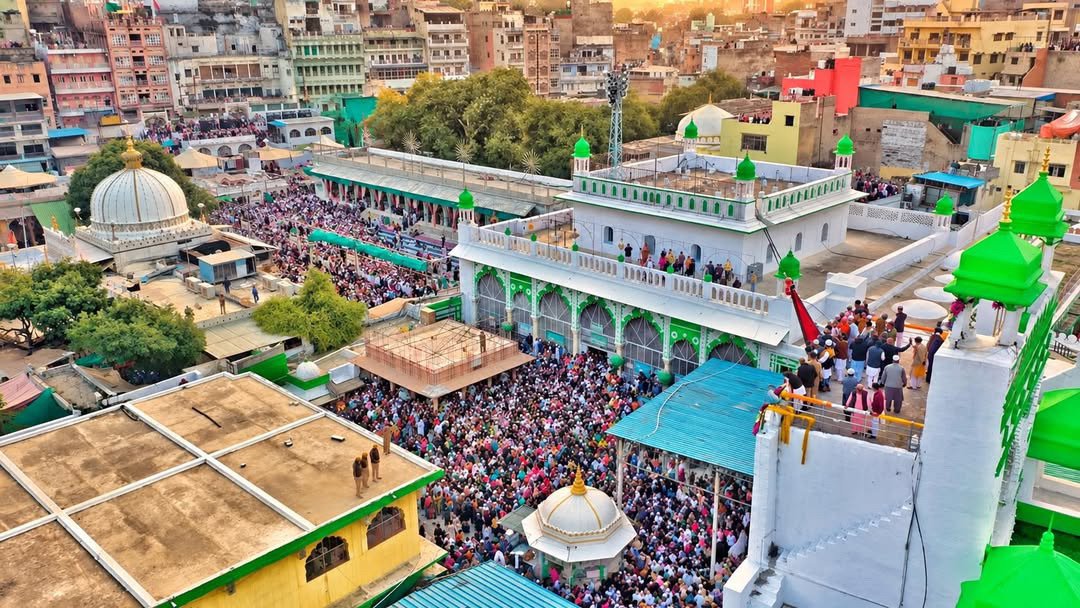
He was a direct descendant of Baba Fariduddin Ganj-e-Shakar and a high-ranking saint of his era blessed with spiritual unveilings and miracles. Emperor Akbar and Sher Shah Suri held immense devotion for him. On one occasion, he visited the court of Gharib Nawaz alongside Emperor Akbar. Although several days passed, they had not yet attained the inner approval/blessing of audience at the holy tomb. Emperor Akbar asked him, "What is the majestic status of Khwaja Sahib?" He replied: "The grandeur of Khwaja Sahib is such that an emperor like Akbar and a humble dervish like Salim have been standing at his court for days, yet have not been granted the honor of acceptance."
Hazrat Sheikh Mujaddid Alfe Sani (Died 1624 CE) — Sirhind, Punjab
He was a foremost saint of the Naqshbandi order in India. When he arrived to pay respects at the court of Khwaja Gharib Nawaz, the shrine caretakers received him with great honor and presented him with a sacred cloth (Ghilaf) from the holy tomb. Accepting it with utmost respect, he uttered with a deep sigh: "Preserve this garment bestowed by Hazrat Khwaja so it may serve as my burial shroud (Kafan)."
This event demonstrates that the caretakers of Khwaja Sahib held the authority to grant shrine relics, and revered masters like Mujaddid Alfe Sani accepted such relics as sacred blessings.
Hazrat Sheikh Abdul Haq Muhaddis Dehlvi (Died 1642 CE) — Mehrauli, Delhi
He received a divine command from the Prophet Muhammad (S.A.W.) stating: "When you reach India, make your first stay in Ajmer, for that is the center of knowledge and gnosis." Upon reaching Ajmer, Sheikh Abdul Haq presented his humble supplication at the court of Sarkar Gharib Nawaz, stating: "O Gharib Nawaz, I have left all my knowledge outside this threshold and stand here with empty hands; bestow upon me whatever you wish." He received spiritual succession (Khilafat) in the Qadiriyya, Naqshbandiyya, and Chishtiyya orders through his spiritual guide Syed Sheikh Abdul Wahab Mutawakkil.
Hazrat Shah Abul Ula Akbarabadi (Died 1651 CE) — Agra, Uttar Pradesh
He was an eminent saint of the Jahangiri era and the founder of the Abul Ulai lineage. Though he took spiritual allegiance under Hazrat Amir Abdullah Naqshbandi, his inner spiritual nourishment came from Hazrat Khwaja Moinuddin Chishti. He visited the holy tomb of Khwaja Gharib Nawaz on numerous occasions.
(Continued from previous narrative) …When he visited Ajmer, his wife sent a cash offering of one rupee and a cloth sheet (Chadar) to be presented at the tomb of Khwaja Gharib Nawaz.
Hazrat Khwaja Fakhruddin Fakhre Jahan — Mehrauli, Delhi
Known as a reformer (Mujaddid) of the Chishti order, he regularly visited the court of Gharib Nawaz to gather spiritual blessings. He viewed the caretakers of the shrine with immense honor and respect, bestowing upon them the esteemed title of "Sahibzadgan" (Noble Descendants).
He was a guiding light for the Chishti Nizami, Niyazi, and Taunsvi lineages. Nearly all his spiritual successors had the honor of visiting the court of Gharib Nawaz. Even today, their shrine custodians (Sajjadanasheen) and disciples visit in large numbers. Hazrat Noor Muhammad Maharvi, Hazrat Khwaja Suleman Taunsvi, and Hazrat Peer Syed Meher Ali Shah all obtained spiritual grace at this court.
Hazrat Haji Syed Waris Ali Shah (Died 1905 CE) — Deva Sharif, Uttar Pradesh
In his youth, he traveled barefoot to pay homage in Ajmer Sharif. As he approached the noble sanctuary, he entered a state of spiritual absorption (Bekhudi) and stepped into the shrine courtyard wearing shoes. One of the elder caretakers cautioned him: "Young man, be mindful of the grandeur of this place and remove the shoes from your feet." Realizing his absorption, he felt such intense regret that he chose never to wear shoes again for the rest of his life.
Visits of Scholars from Farangi Mahal (Darul Uloom)
The ancestor of the Farangi Mahal scholars, Hazrat Allama Qutbuddin Shaheed Sihalvi, was a renowned figure of the Chishti order. The scholars of Farangi Mahal held spiritual ties with both the Qadiriyya and Chishtiyya orders. Almost every member of this group, from Allama Qutbuddin down to the present day, has visited the sacred threshold.
Maulana Abdul Bari Farangi Mahali held the firm belief that even if one had to take a loan to travel to Ajmer, one should certainly go.
Descendants of Hazrat Kamaluddin Allama
The descendants of Hazrat Yahya Madani—including Mahmood Miyan, Rajan Miyan, and other family members—consistently visited the court of Gharib Nawaz. Hazrat Khwaja Nasiruddin Chishti Roshan Chirag Ahmadabadi advised his family and disciples: "Whenever you present yourself at the court of Gharib Nawaz, keep your head bowed, present your devotion once, and offer your farewell tribute at the time of departure, regardless of how many days you stay in Ajmer. Leave all worldly pride and ego outside when entering the sanctuary."
Influence of the Chishti Order in Deoband
Hazrat Maulana Madani wrote in a letter: "Our elders followed a noble path—outwardly Naqshbandi and inwardly Chishti." (Maktubat-e-Shaikhul Islam, Vol. 3)
Hazrat Maulana Madani possessed such deep devotion for Khwaja Sahib that he would travel from home with the sole intention of visiting the grand shrine. He remarked: "Visiting Hazrat Sultan-ul-Hind as a secondary stop during another journey does not suit his grand status; I undertake a dedicated journey solely for his pilgrimage." Maulana Madani holds an elevated position among the scholars of Deoband.
The leading scholars of Deoband and Sheikh-ul-Arab wal Ajam, Hazrat Haji Imdadullah Sabri Muhajir Makki, took spiritual allegiance (Bait) here. Haji Imdadullah himself drew immense grace from the court of Gharib Nawaz, as did his successors and disciples—such as the founder of Darul Uloom Deoband Maulana Qasim Nanautavi, Maulana Khalil Ahmad Ambethvi, Maulana Ashraf Ali Thanvi (Anwar-e-Khwaja, p. 48), Maulana Hafiz-ur-Rehman Seoharwi, Maulana Hussain Ahmad Madani (Head Teacher at Darul Uloom Deoband), and his son Maulana Asad Madani.
Page 40
(Continued from previous narrative) …They presented themselves at the court, and recently his son Maulana Mahmood Madani visited the holy shrine in 2011 to offer homage, stating: "Khwaja Sahib is our imam and guide; who could revere him more than us?"
Founder of the Sikh Faith
Guru Nanak Dev Ji visited the shrine of Khwaja-e-Buzurg with deep reverence to receive spiritual grace. He stayed for several days, engaging in meditation (Muraqaba) and carefully studying the life of Khwaja Sahib. He also documented his personal impressions of his visit. To this day, followers of Guru Nanak Dev Ji bow their heads in devotion at the sacred court.
Visits of Fazil-e-Barelvi’s Successors and Disciples
While many masters hold spiritual authorization across multiple lineages, one order often remains dominant. Though Hazrat Fazil-e-Barelvi was predominantly inclined toward the Qadiriyya order, he maintained heartfelt devotion for Khwaja Gharib Nawaz.
The eldest son of Fazil-e-Barelvi, Maulana Hamid Raza Khan, visited the court in 1919 during his father's lifetime. Following Fazil-e-Barelvi, prominent members of his family have continuously visited the sanctuary. Hazrat Maulana Ahmad Raza Khan's brother and disciple of Daag Dehlvi wrote in praise of Khwaja Sahib:


