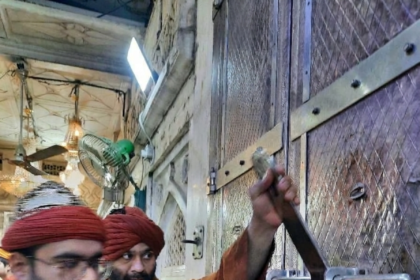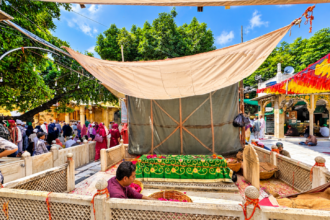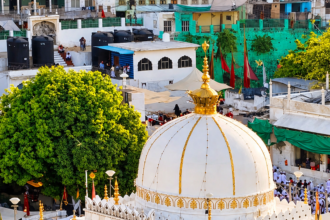


Begami Dalan (Ahata-e-Noor) – The Radiant Courtyard of Princess Jahanara
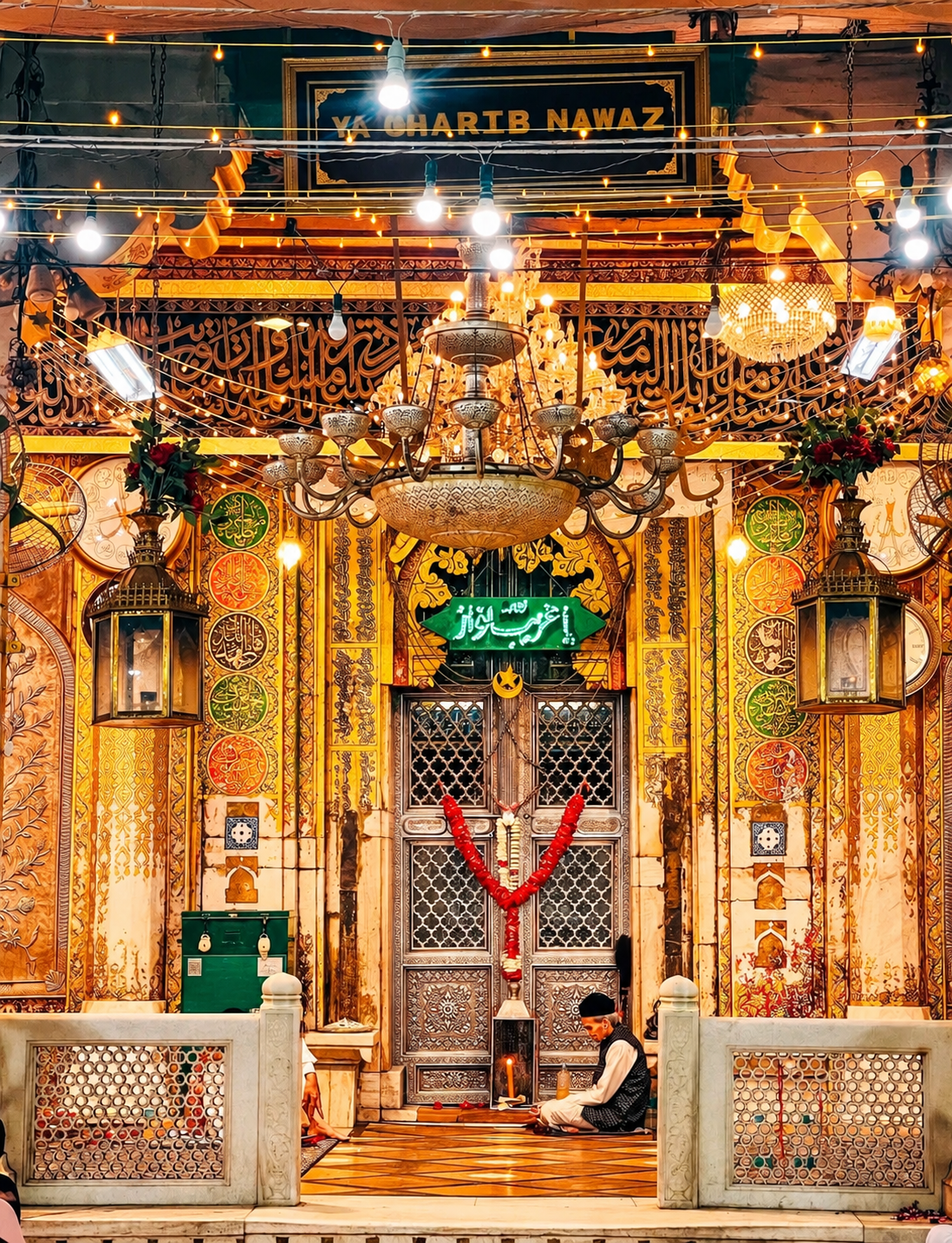
*BEGAMI DALAN*
its also Known As Ahata-E-Noor
Princess Jahan Ara Begum and the Mughal Heritage of Ajmer Sharif
An embodiment of devotion from Princess Jahanara,
- *BEGAMI DALAN*
- its also Known As Ahata-E-Noor
- Princess Jahan Ara Begum and the Mughal Heritage of Ajmer Sharif
- She sacrificed her wealth and life for Khwaja’s cause—
- This Begami Dalan stands as a monument to her
- Introduction
- Who commissioned it?
- Who was the architect?
- Therefore:
- Patron: Princess Jahan Ara Begum
- Period: Shah Jahan’s reign
- Date: Commonly associated with 1643 CE
- Architect: Not securely identified
- Jahan Ara and the Chishti tradition
- Architectural role
- The Mughal royal women
- Connection with Shah Jahan
- Historical significance
- Conservation
- Conclusion
Moth to the flame of Khwaja Sanjari’s beauty.
She sacrificed her wealth and life for Khwaja’s cause—
This Begami Dalan stands as a monument to her
Introduction
The Begami Dalan is one of the important architectural spaces within the Ajmer Sharif Dargah complex and is associated with Princess Jahan Ara Begum, the beloved daughter of Mughal Emperor Shah Jahan.
Jahan Ara was not merely a member of the Mughal royal family. She had a deep association with the Chishti spiritual tradition and played an important role in the cultural and religious life of the Mughal court.
Who commissioned it?
The Begami Dalan is associated with Jahan Ara Begum, daughter of Shah Jahan.
Historical sources also associate her with other contributions to the Dargah complex, including the railing surrounding the shrine and the Begami Chabutra.
A historical source dates the Begami Dalan to approximately 1053 AH / 1643 CE.
Who was the architect?
The individual architect is not securely identified in the historical evidence consulted.
Therefore:
Patron: Princess Jahan Ara Begum
Period: Shah Jahan’s reign
Date: Commonly associated with 1643 CE
Architect: Not securely identified
Jahan Ara and the Chishti tradition
Jahan Ara had a profound spiritual interest in Sufism.
Her association with the Chishti tradition is especially important for understanding her contribution to Ajmer.
She authored works associated with Sufi saints and traditions and maintained a personal connection with the spiritual culture of the Chishti order.
Her contribution to Ajmer Sharif therefore cannot be understood simply as an architectural donation.
It was part of her spiritual relationship with the shrine.
Architectural role
The Begami Dalan forms part of the architectural spaces surrounding the central shrine.
The word “dalan” generally refers to a covered hall, veranda or pavilion-like architectural space.
Such spaces are particularly important in shrine architecture because they provide transitional areas between courtyards, prayer spaces and the central sacred enclosure.
The Mughal royal women
The Begami Dalan also demonstrates an important but sometimes overlooked aspect of Mughal architectural history: royal women were significant patrons of architecture.
Mughal women commissioned mosques, gardens, tombs, caravanserais and religious structures.
Jahan Ara was among the most influential of these royal patrons.
Her contribution to Ajmer is therefore part of a much larger history of female patronage in Mughal India.
Connection with Shah Jahan
Jahan Ara’s contribution came during the period when her father Shah Jahan was actively associated with Ajmer.
The Shahjahani Masjid and Shahjahani Gate represent the emperor’s architectural contribution.
The Begami Dalan represents the contribution of his daughter.
Together they demonstrate how the Mughal royal family’s relationship with Ajmer extended beyond the emperor himself.
Historical significance
The Begami Dalan is important for three reasons.
First, it represents Mughal architectural patronage.
Second, it records the contribution of a prominent Mughal princess.
Third, it reflects the close connection between the Mughal court and the Chishti shrine.
The structure therefore belongs simultaneously to architectural, social, religious and women’s history.
Conservation
The Dargah is a living religious complex rather than an abandoned monument.
Structures such as the Begami Dalan continue to exist within an environment of daily pilgrimage, prayer and religious activity.
Preserving such spaces requires sensitivity to both historical architecture and continuing religious use.
Conclusion
The Begami Dalan represents the contribution of Princess Jahan Ara Begum to the architectural and spiritual heritage of Ajmer Sharif.
Although the name of its individual architect has not been securely preserved, its association with Jahan Ara gives it exceptional historical importance.
It is a reminder that the architectural history of Ajmer Sharif was shaped not only by emperors and sultans but also by royal women, devotees and patrons whose devotion became permanently embedded in the shrine’s physical landscape.