
Urs e Sharif – The Annual Grand Pilgrimage at Ajmer Dargah
Urs Mubarak (The Sacred Urs Festival)
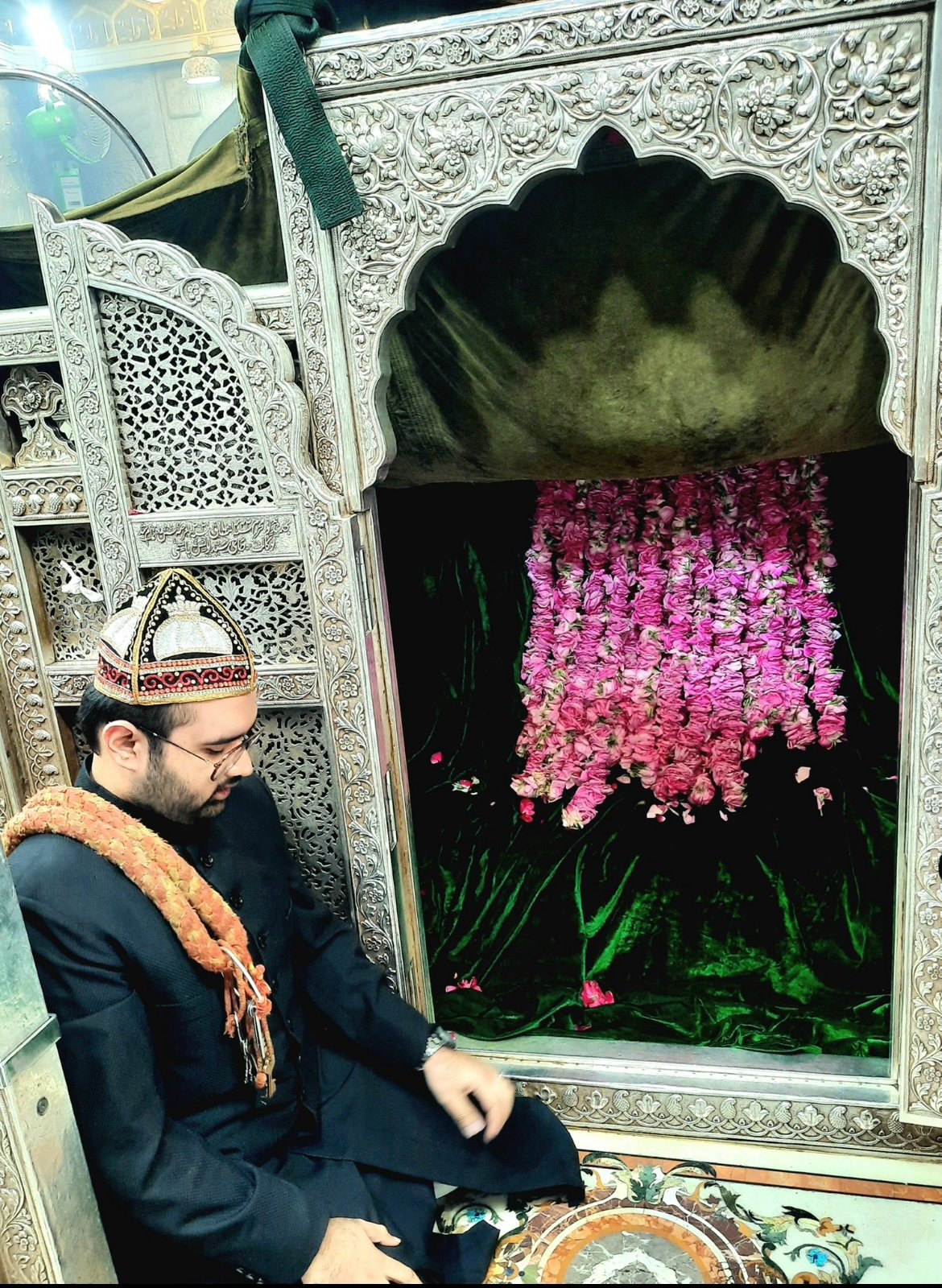
The literal meaning of the word "Urs" is "wedding," which is why a bride and groom are called Uroos. In Islamic tradition, the date of passing of holy saints is referred to as Urs.
- Urs Mubarak (The Sacred Urs Festival)
- Haza HabibAllah Matafi Habibullah
- Changes in Ceremonies During the Urs Sharif
- Jhijhari (Silver Lattice Gate)
- 28th Jamadi-us-Sani
- 29th Jamadi-us-Sani
- Chand Raat (Sighting of the Rajab Moon)
- (At your doorstep, O Khwaja, the royal drums resound!)
- بر تو ای محفل شاهانه مبارک باشد
- ساقیا باده و پیمانه مبارک باشد
- Blessed be the cup and wine from the Spiritual Cupbearer!"
- This is followed by an Urdu devotional couplet:
- इलाही ता बह अबद आस्ताने यार रहे
- यह आसरा है गरीबों का बरकरार रहे
- O Lord, may this sanctuary of the Beloved endure till eternity;
- May this refuge for the poor remain forever steadfast!"
- Gusl (Ritual Bathing of the Mazar)
- Kul Ka Din (6th Rajab – The Final Day of Urs)
- Bada Gusl (The Great Ritual Washing – 9th Rajab)
"نَمْ كَنَوْمَةِ الْعَرُوسِ الَّذِي لَا يُوقِظُهُ إِلَّا أَحَبُّ أَهْلِهِ إِلَيْهِ"
"Sleep like a bride, whom none shall awaken except the most beloved of her family."
Since the angels referred to the successful soul as a bride (Uroos), the day of passing became known as the day of Urs. When saints of Allah depart this world, their departure marks their ultimate union with the Divine (Visal), which is why this sacred day of reunion with the Beloved is celebrated as Urs.
When Hazrat Khwaja Gharib Nawaz (R.A.) passed away on the 6th of Rajab-ul-Murajjab, the following phrase appeared on his radiant forehead, written by divine light
Opening of Jannati Darwaza During Urs
During the sacred 6 days of Urs-e-Mubarak (1st to 6th Rajab), the historic silver-plated Jannati Darwaza (Gateway of Paradise) is opened for devotees to pass through and receive divine mercy.
Haza HabibAllah Matafi Habibullah
"This is the beloved of Allah; he passed away in the love of Allah."
Changes in Ceremonies During the Urs Sharif
Jhijhari (Silver Lattice Gate)
The doorway to the silver courtyard situated to the left of the sacred tomb is called the Jhijhari.
On 25th Jamadi-us-Sani, following the Fajr prayer, the Jhijhari is locked.
From the sighting of the Rajab moon until the 6th night of Rajab, the Jhijhari remains open daily between the first ritual bath (Gusl) and the second ritual bath.
After the second bath, it is closed again until the morning service (Khidmat), after which it reopens briefly before being locked following Fajr prayers.
From 25th Jamadi-us-Sani to 5th Rajab, the evening prayer of light (Roshni ki Dua) is recited outside the Begami Dalan.
28th Jamadi-us-Sani
On the 28th of Jamadi-us-Sani, after the Maghrib prayer, the sandalwood paste applied throughout the year is reverently removed from the sacred tomb by the Khuddam. It is then distributed among the Khuddam family as sacred blessings (Tabarruk).
29th Jamadi-us-Sani
One hour before Fajr prayers on the 29th of Jamadi-us-Sani, the keyholder (Kaleed Bardar) opens the Jannati Darwaza (Gateway to Paradise). This gate remains open continuously until the sandalwood service (Sandal Mali) at 3:00 PM on the 6th of Rajab-ul-Murajjab.
Chand Raat (Sighting of the Rajab Moon)
As soon as the new moon of Rajab is sighted, traditional kettledrums (Naubat) begin playing at the high portal (Naubat Khana) of the shrine. The devotees spontaneously chant:
"Khwaja Tore Angana Naubat Baje"
(At your doorstep, O Khwaja, the royal drums resound!)
After the Maghrib prayer, the royal Qawwals present a Persian Manqabat before the sacred tomb as a devotional offering:
بر تو ای محفل شاهانه مبارک باشد
ساقیا باده و پیمانه مبارک باشد

"Blessed be this royal gathering upon you;
Blessed be the cup and wine from the Spiritual Cupbearer!"
This is followed by an Urdu devotional couplet:
इलाही ता बह अबद आस्ताने यार रहे
यह आसरा है गरीबों का बरकरार रहे
O Lord, may this sanctuary of the Beloved endure till eternity;
May this refuge for the poor remain forever steadfast!"
Gusl (Ritual Bathing of the Mazar)
During the 6 days of the Urs Sharif—from Chand Raat to the 6th night of Rajab—the luminous tomb receives two ritual baths daily.
1. First Gusl (Night Bath)
Since the afternoon sandalwood service (Sandal Mali) is suspended during the six days of Urs, the first ritual service takes place after the Isha prayer.
Two members of the Khuddam stand inside the inner shrine area. One performs the bathing ritual while the other pours water, and other Khuddam stand between the silver railings.
The bathing begins at the head of the sacred tomb using water infused with rose water (Arq-e-Gulab) and kewra essence (Arq-e-Kewda).
The fragrance-infused water collects in a dedicated reservoir called the Gulla. The Khuddam preserve this sacred water in bottles to distribute as special blessings (Tabarruk-e-Khas).
2. Second Gusl (Late Night Bath)
The second ritual bath takes place late at night, between 1:30 AM and 2:00 AM. This is an ancient tradition performed in the presence of representatives (Musharun-Ilaih) from all seven Khuddam families and the two keyholders of the day.
Kul Ka Din (6th Rajab – The Final Day of Urs)
The 6th day of Rajab-ul-Murajjab is known as "Kul Ka Din"—the day Hazrat Khwaja Gharib Nawaz (R.A.) passed away.
At 9:00 AM, entry to the inner shrine is closed for pilgrims, though all outer doors remain open.
Pilgrims gather around all four sides of the sacred tomb, standing with hands folded in deep prayer during this highly auspicious time of accepted supplications (Qabuliyat-e-Dua).
Inside the inner shrine, the Khuddam recite the spiritual lineage (Shijra), salutations (Salam), and extensive prayers for all humanity and devotees.
Following the recitations, fanfare trumpets (Shamiyana) play at the drum house (Naqqar Khana), and ceremonial cannon shots are fired from the southern hill, formally signaling the conclusion of the Urs festival. In shrine terminology, this is called "Kul Ho Gaya".
The doors to the sacred tomb are then closed, leaving only the Khuddam inside to perform the routine sandalwood service (Sandal Mali), after which normal daily rituals resume.
(Note: The announcement of Chand Raat is similarly declared via trumpets and ceremonial cannon fire.)
Bada Gusl (The Great Ritual Washing – 9th Rajab)
On the 9th of Rajab-ul-Murajjab at 8:30 AM, the Bada Gusl (Great Ritual Washing) is performed at the shrine.
In addition to bathing the sacred tomb, the entire floor of the Holy Dome and the surrounding courtyard areas are thoroughly washed.
Only members of the Khuddam family are permitted inside the dome and inner courtyard during this time.
Devotees and pilgrims join in washing the outer courtyard floors of the shrine with deep faith, which is why it is called the "Bada Gusl".
Approximately 1 to 1.5 hours later, the doors of the Holy Dome are reopened for all pilgrims.