

Badi Deg at Ajmer Sharif – Emperor Akbar's Historic Royal Cauldron
Badi Deg (The Large Cauldron)
Deg (Khurd-o-Kalan) – The Cauldrons
The great Akbar presented the large cauldron here,
- Badi Deg (The Large Cauldron)
- Deg (Khurd-o-Kalan) – The Cauldrons
- By God! You have seen nothing if you haven't witnessed
- Shahe Deen Parwar-o-Jamshed Sareer
- Khosrowe Ahd-e-Muhammad Akbar
- Sākht Be-shubha Pa'e Fath-e-Chitor
- Dege Rooeen Tan-e-Vāze Dar-e-Paikar
- Bahre Tāreekhe Ve Az Ālame Gaib
- Historic Dimensions & Capacity of Emperor Akbar's Cauldron
- Ingredients for Cooking the Royal Badi Deg
- – 2,400 kg of superior aromatic rice
- – 1,200 kg of pure cane sugar
- – 200 kg of pure desi ghee
- The Sacred Cooking & Distribution Ceremony
Followed by Jahangir, who offered the smaller cauldron.
By God! You have seen nothing if you haven't witnessed
The magnificent distribution from Khwaja's cauldrons.
Sponsoring Badi Deg Cooking
Devotees who wish to sponsor the cooking of Badi Deg for fulfillment of vows (Mannat) or in gratitude can coordinate all arrangements and ingredient provisioning directly through hereditary Khuddam.
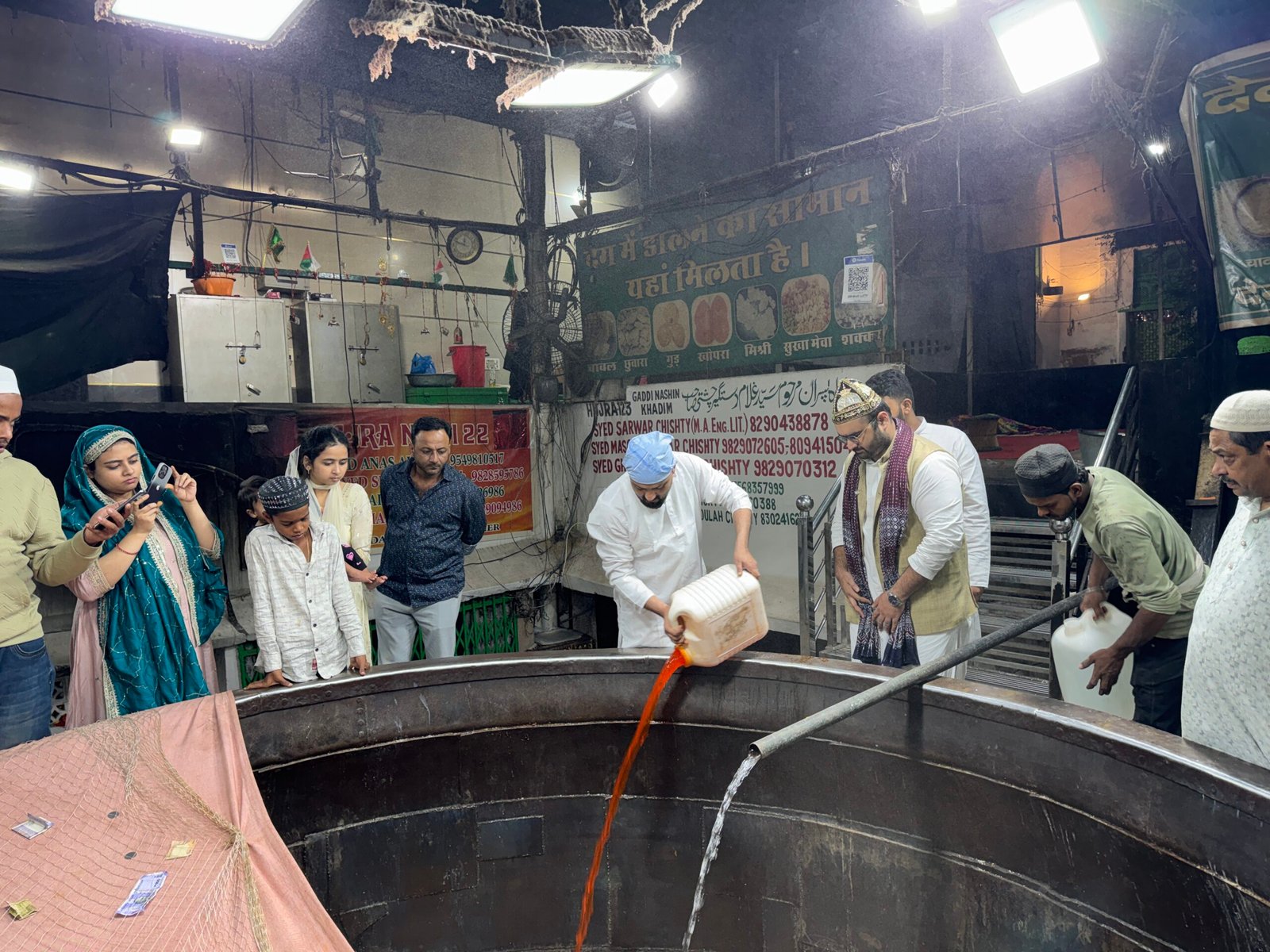
Located to the right after passing through Buland Darwaza, this cauldron is so grand that its match is rare. Emperor Akbar made a vow (Mannat) that if he conquered the Fort of Chittorgarh, he would present a cauldron capable of cooking 125 Maunds of food as an offering (Nazar) to the Astana-e-Aalia.
Upon capturing Chittorgarh, Akbar traveled directly with his army to Ajmer Sharif, presented the cauldron, cooked food in it, and distributed it among the poor. Mir Alauddaula (pen-name 'Kafi') recorded the completion date in verse:
Shahe Deen Parwar-o-Jamshed Sareer
Khosrowe Ahd-e-Muhammad Akbar
Sākht Be-shubha Pa'e Fath-e-Chitor
Dege Rooeen Tan-e-Vāze Dar-e-Paikar
Bahre Tāreekhe Ve Az Ālame Gaib
"Dege Chitor Kashā Shud Yaksar"
(Note: Although Ahsan-us-Siyar lists 974 AH below the verse, the numerical sum of the chronogram equals 1568 CE / 974 AH, correcting a scribe error).
Deg Cauldron Comparison at a Glance
Key historical facts between the two imperial cauldrons installed at Ajmer Sharif:
Historic Dimensions & Capacity of Emperor Akbar's Cauldron
The Badi Deg is one of the largest ancient cooking cauldrons in human history. It measures approximately 10.5 feet in diameter and 12 feet in circumference, with a massive capacity of preparing up to 125 Maunds (approximately 4,800 kilograms) of sanctified sweet rice (Zarda/Niyaz) in a single cooking cycle.
Ingredients for Cooking the Royal Badi Deg
The traditional formulation of consecrated sweet rice prepared in Badi Deg requires huge quantities of pure ingredients:
– 2,400 kg of superior aromatic rice
– 1,200 kg of pure cane sugar
– 200 kg of pure desi ghee
– Generous quantities of almonds, cashews, raisins, saffron (zafran), and aromatic spices including green cardamom, mace, and cloves.
The Sacred Cooking & Distribution Ceremony
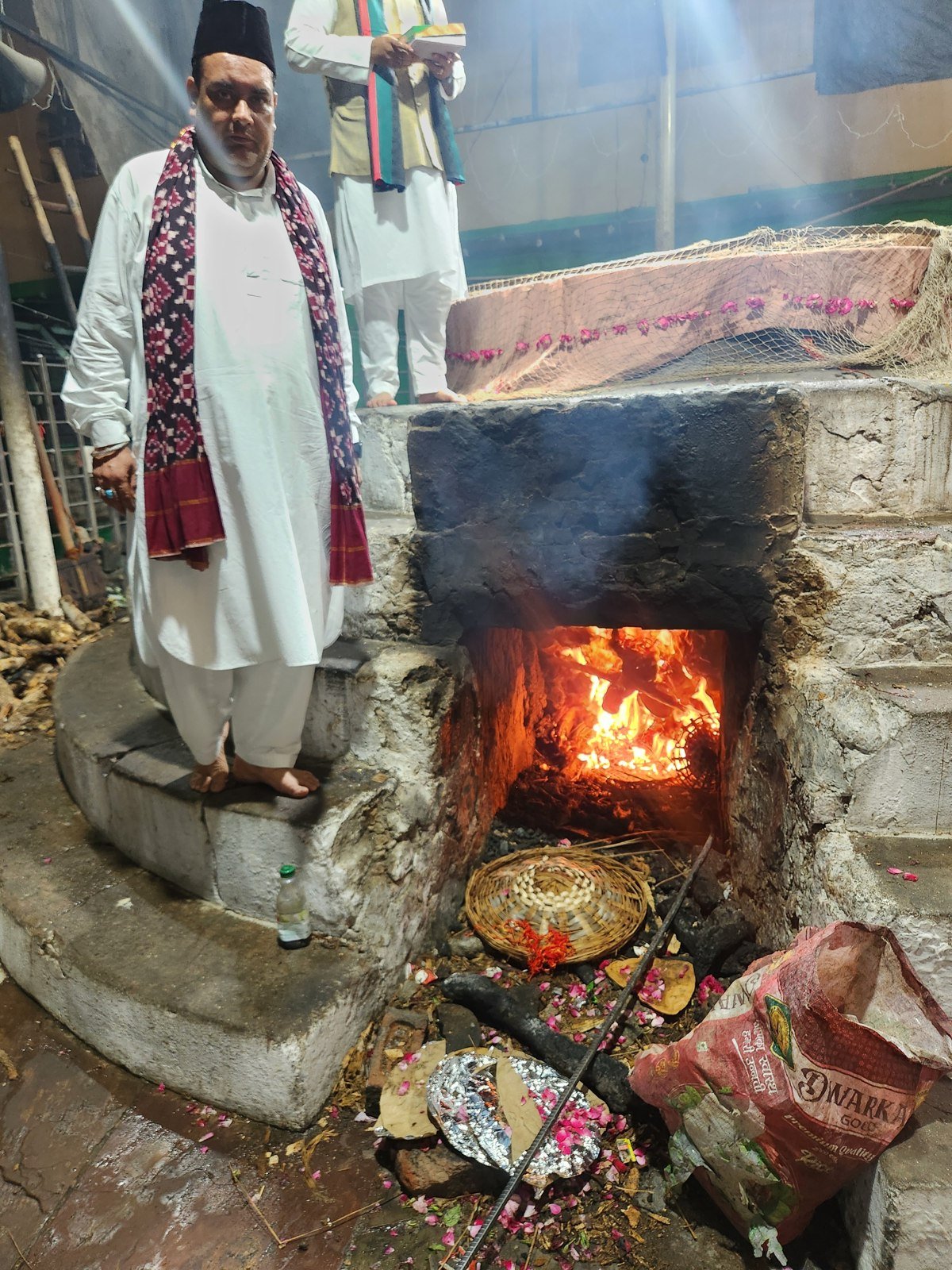
Fires are lit beneath the cauldron through specialized subterranean firewood trenches. Devoted hereditary cooks (Langar-khana Bawarchis) stir the gigantic pot with long wooden paddles. Once fully prepared, the royal cauldron is sealed for blessing (Fateha) by the Khuddam. The sanctified food (Tabarruk) is then distributed among thousands of gathered pilgrims, poor seekers, and devotees.
Devotees who sponsor the cooking of Badi Deg receive designated containers of this divine tabarruk to distribute among their families, businesses, and hometown communities.