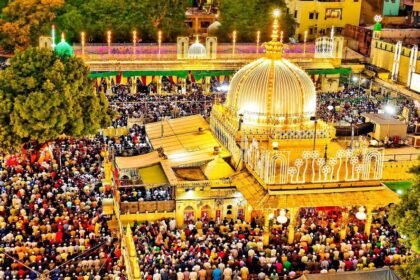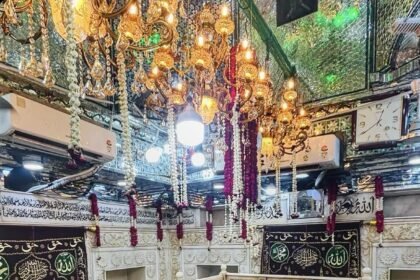

Arcot Dalan (Karnataki Dalan) – Royal Pavilion of Nawab of Arcot
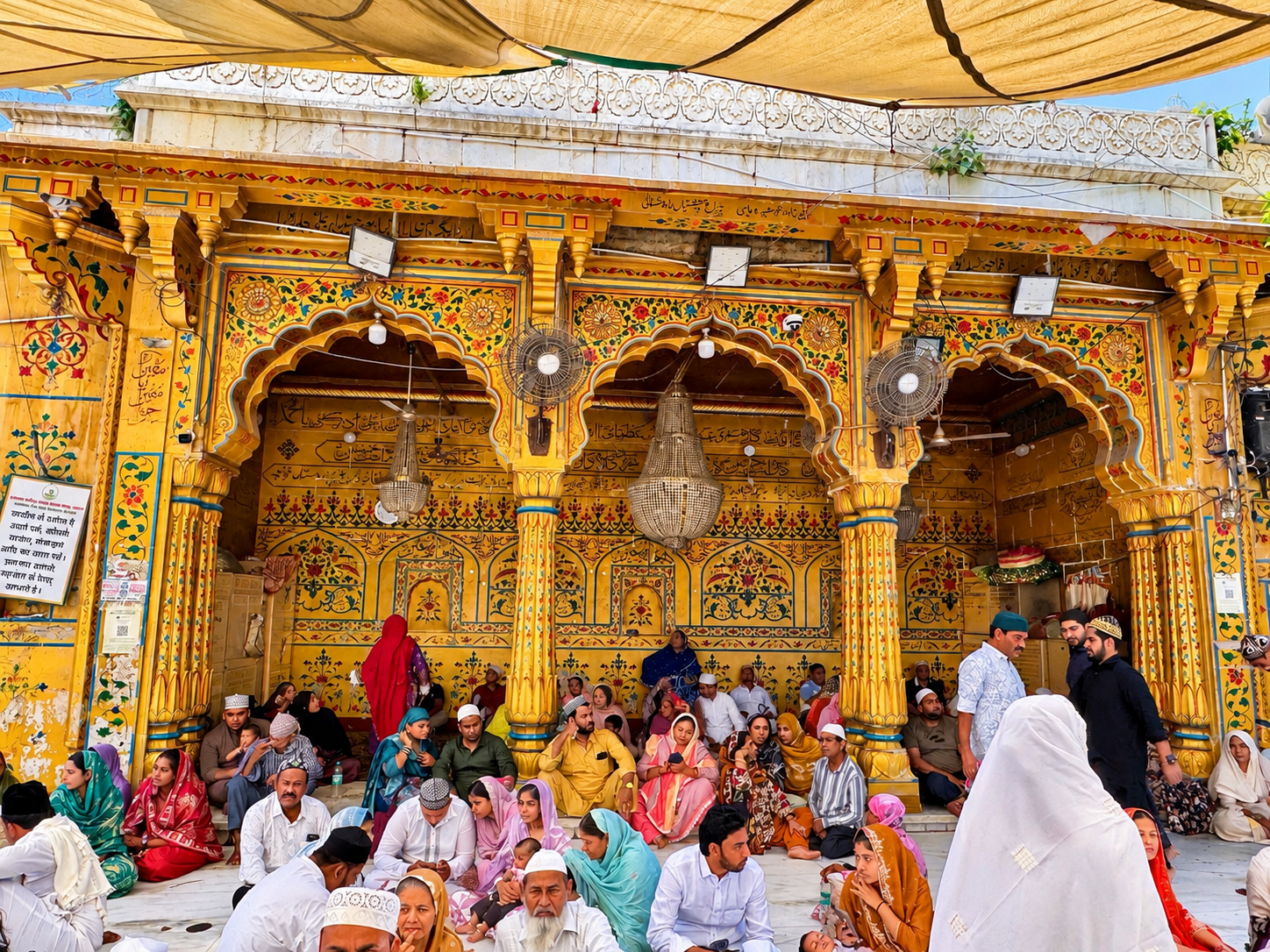
*Arcot Dalan at Ajmer Sharif*
The Legacy of Nawab Muhammad Ali Wallajah
Introduction
The Arcot Dalan, also known as the Arcot Dalan of Ajmer Sharif, is a historic structure within the sacred precincts of the Dargah Sharif of Hazrat Khwaja Muinuddin Hasan Chishty, Gharib Nawaz (R.A.) in Ajmer, Rajasthan.
- *Arcot Dalan at Ajmer Sharif*
- The Legacy of Nawab Muhammad Ali Wallajah
- Introduction
- Who was Nawab Muhammad Ali Wallajah?
- The Historical Background
- Date of the Arcot Dalan
- The safest wording is:
- Why was the Arcot Dalan constructed?
- The Arcot Dalan and Khidmat
- A Monument of Interregional Devotion
- Who was the Architect?
- Therefore, it is historically appropriate to identify:
- Patron: Nawab Muhammad Ali Khan Wallajah of Arcot
- Purpose: Shelter/comfort and service for pilgrims
- Period: Late 18th–early 19th century
- Architect: Not securely identified in surviving sources
- Relationship with the Wider Dargah Complex
- Historical and Cultural Importance
- It represents several important themes in Indian history:
- Preservation and Future Generations
- Conclusion
The Dalan represents an important chapter in the long history of royal, noble and philanthropic patronage associated with the shrine. While Ajmer Sharif has been supported and developed by rulers from different dynasties and regions over many centuries, the Arcot Dalan reflects the devotion and generosity of the Nawab of Arcot, whose connection with the Dargah demonstrates the wide geographical reach of the spiritual tradition of Khwaja Gharib Nawaz (R.A.).
The structure is traditionally associated with Nawab Muhammad Ali Khan Wallajah, the Nawab of Arcot, also known as the Nawab of the Carnatic. Historical accounts connect his patronage with the construction and development of facilities for pilgrims visiting the sacred shrine.
Who was Nawab Muhammad Ali Wallajah?
Muhammad Ali Khan Wallajah (1717–1795) was the Nawab of the Carnatic, commonly referred to as the Nawab of Arcot. He was an influential ruler in 18th-century South India and maintained political and cultural connections with different parts of the Indian subcontinent.
His association with Ajmer Sharif is particularly significant because Arcot was geographically far from Ajmer. His patronage demonstrates the reputation of Khwaja Muinuddin Chishty (R.A.) as a spiritual figure whose shrine attracted devotees and patrons from across India.
The tradition of supporting the Dargah was not limited to rulers who governed Ajmer. Patrons from distant regions also contributed to the shrine, its buildings and facilities for pilgrims.
The Arcot Dalan is an example of this wider tradition.
The Historical Background
The late 18th century was a period of considerable political change in Ajmer.
After the decline of Mughal political authority in the region, control of Ajmer changed hands. Historical scholarship records that Scindia rule began in Ajmer in 1791.
During this period, the Nawab of Arcot sought to maintain his connection with the Dargah and requested permission to support repairs and improvements to its buildings.
A scholarly history of the shrine records correspondence concerning the Nawab’s desire to contribute towards the repair of the Dargah. The same historical research describes his construction of a shelter for pilgrims, associated with his recovery from illness.
This historical background is particularly important because it demonstrates that the Arcot contribution was not simply an isolated architectural project. It formed part of a larger relationship between the Nawab and the sacred shrine.
Date of the Arcot Dalan
The exact Gregorian date of the Arcot Dalan is not completely consistent across modern sources.
Some historical and scholarly sources associate the structure with 1207 AH, corresponding approximately to 1792–1793 CE.
Other modern descriptions give dates around 1800 CE, while some websites give later dates.
Because of these variations, a historically responsible description should avoid presenting an uncertain date as absolute fact.
The safest wording is:
“The Arcot Dalan is associated with the late 18th or early 19th century, with historical accounts recording 1207 AH.”
This places the monument correctly within the period of Nawab Muhammad Ali Wallajah’s patronage and the political transition in Ajmer.
Why was the Arcot Dalan constructed?
The Arcot Dalan is traditionally understood as a facility connected with the comfort and accommodation of pilgrims visiting Ajmer Sharif.
Pilgrimage has always been an important part of the life of the Dargah. Visitors historically arrived from distant regions, often travelling for considerable periods before reaching Ajmer.
Facilities providing shelter, shade and space for pilgrims were therefore an important part of the functioning of the shrine.
The Arcot Dalan reflects this principle of khidmat, or service.
Rather than representing only royal prestige, its purpose was connected with the needs of people visiting the sacred shrine.
This is one of the reasons the structure has continued to hold historical importance within the Dargah complex.
The Arcot Dalan and Khidmat
The concept of khidmat is central to the history of Ajmer Sharif.
The Dargah developed over centuries through contributions from rulers, nobles, devotees, merchants and ordinary pilgrims.
Buildings were constructed not only for ceremonial purposes but also to provide facilities for worship, food distribution, accommodation and other forms of service.
The Arcot Dalan belongs to this tradition.
Its association with the Nawab of Arcot demonstrates how a ruler could express devotion to Khwaja Gharib Nawaz (R.A.) through practical service to the people visiting the shrine.
A Monument of Interregional Devotion
One of the most interesting aspects of the Arcot Dalan is its geographical connection.
Arcot was in South India, while Ajmer is in Rajasthan.
The construction of a facility at Ajmer by a South Indian ruler illustrates the extraordinary geographical reach of the Chishti tradition.
For centuries, people from different regions, languages and social backgrounds travelled to Ajmer Sharif.
The shrine became a meeting place where people came for ziyarat, prayer, spiritual reflection and seeking blessings.
The Arcot Dalan is therefore not simply a local architectural feature. It is evidence of the wider network of devotion that connected Ajmer with different parts of India.
Who was the Architect?
The individual architect or master builder responsible for designing the Arcot Dalan has not been reliably identified in the historical sources examined.
This distinction is important.
Historical records frequently preserve the name of the ruler or patron who commissioned a monument while failing to preserve the names of the craftsmen and architects who physically designed and constructed it.
Therefore, it is historically appropriate to identify:
Patron: Nawab Muhammad Ali Khan Wallajah of Arcot
Purpose: Shelter/comfort and service for pilgrims
Period: Late 18th–early 19th century
Architect: Not securely identified in surviving sources
The monument should not be attributed to a named architect without documentary evidence.
Relationship with the Wider Dargah Complex
The Arcot Dalan forms part of a much larger architectural landscape.
Ajmer Sharif contains structures representing many different historical periods.
The Buland Darwaza reflects the medieval Malwa Sultanate period.
The Akbari Masjid represents the Mughal period of Emperor Akbar.
The Shahjahani Masjid represents the architectural patronage of Emperor Shah Jahan.
The Begami Dalan reflects the contribution of Princess Jahan Ara Begum.
Later structures, including the Nizam Gate, demonstrate the continuing patronage of Indian rulers into the modern period.
The Arcot Dalan adds another important dimension: the contribution of a South Indian Muslim ruler to the sacred architecture and pilgrim facilities of Ajmer.
Historical and Cultural Importance
The significance of the Arcot Dalan goes beyond its physical structure.
It represents several important themes in Indian history:
Faith: A ruler’s spiritual connection with one of India’s most important Sufi shrines.
Service: The provision of facilities for pilgrims.
Patronage: The tradition of supporting religious institutions through architecture and financial assistance.
Cultural connections: The relationship between South India and Rajasthan.
Living heritage: The continuing religious significance of Ajmer Sharif.
The structure therefore deserves to be understood as part of the living heritage of the Dargah rather than merely as an old building.
Preservation and Future Generations
Historic structures within a living shrine face a unique challenge.
Unlike monuments that are no longer used, Ajmer Sharif remains an active centre of pilgrimage throughout the year.
Thousands of visitors come for ziyarat, especially during significant religious occasions and the annual Urs of Khwaja Gharib Nawaz (R.A.).
The preservation of structures such as the Arcot Dalan therefore requires respect for both heritage conservation and continuing religious use.
Maintaining the historical character of the structure allows future generations to understand the diverse history of the Dargah and the people who contributed to its development.
Conclusion
The Arcot Dalan is a valuable part of the architectural and cultural heritage of Ajmer Sharif Dargah.
Associated with Nawab Muhammad Ali Khan Wallajah of Arcot, the structure reflects the devotion of a ruler from South India towards Hazrat Khwaja Muinuddin Chishty Gharib Nawaz (R.A.).
Historical scholarship records the Nawab’s efforts to support the Dargah during a period of political change in Ajmer and associates his patronage with the construction of a shelter for pilgrims.
Although the exact date varies among sources and the name of the individual architect has not been securely preserved, the historical significance of the Arcot Dalan remains clear.
It represents the spirit of khidmat, generosity and devotion that has shaped the Dargah for centuries.
From the medieval Sultans of Malwa to the Mughal emperors, from Princess Jahan Ara to the Nawab of Arcot and later patrons such as the Nizam of Hyderabad, the architectural history of Ajmer Sharif tells a remarkable story: generations of rulers and devotees from different parts of India contributed to a sacred place that continues to welcome people from around the world.
The Arcot Dalan stands as one of those enduring reminders of the deep and widespread reverence for Khwaja Gharib Nawaz (R.A.) and the centuries-old tradition of serving those who come to Ajmer Sharif for ziyarat.