
Hazrat Baba Fariduddin Ganjshakar (R.A.) – The Crown of Chishty Asceticism
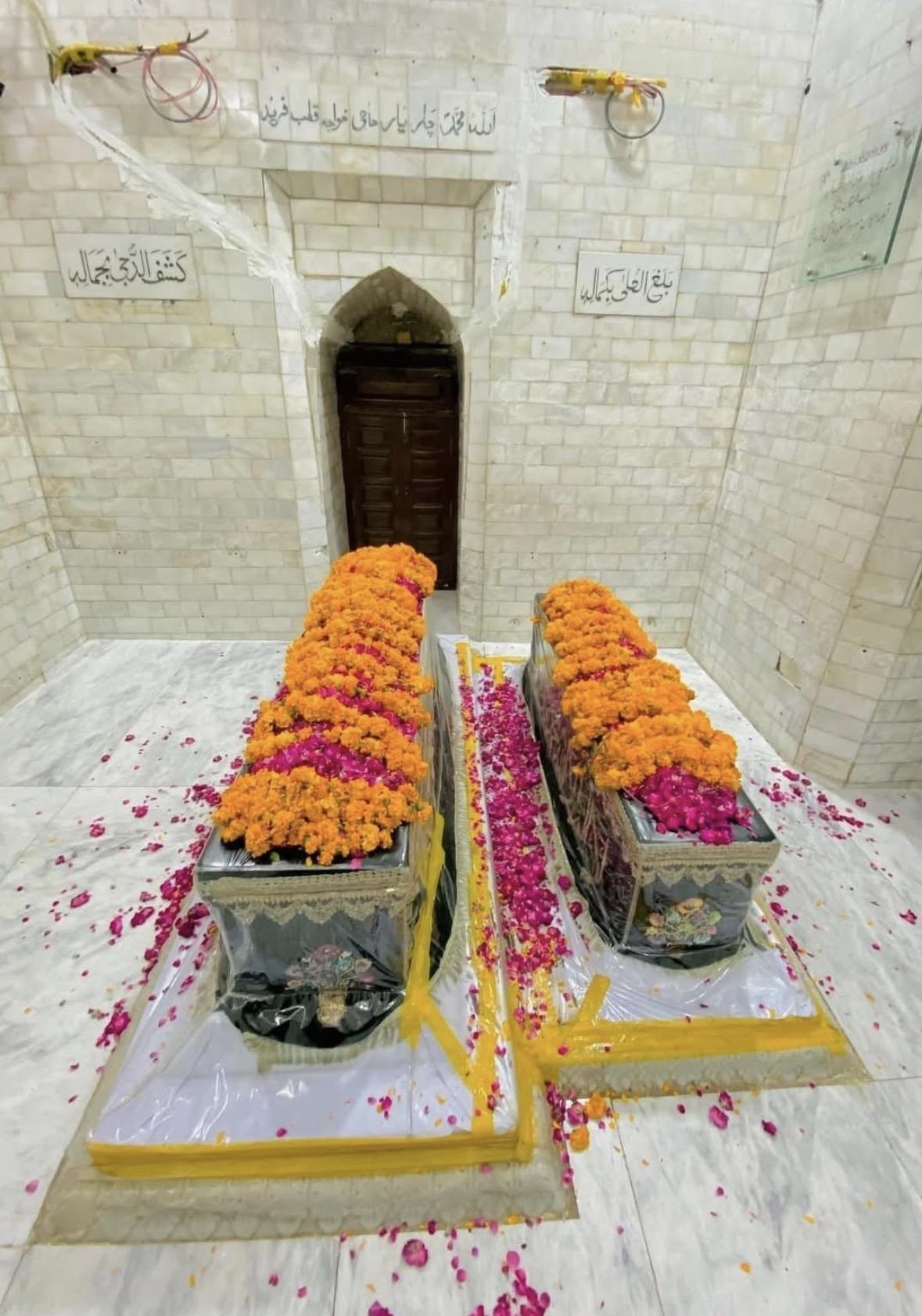
Hazrat Baba Fariduddin Masood Ganj-e-Shakar (R.A.)
His Chilla Sharif at Ajmer Sharif and Spiritual Legacy
Muharram at Ajmer Sharif — Opening of the Chilla Sharif
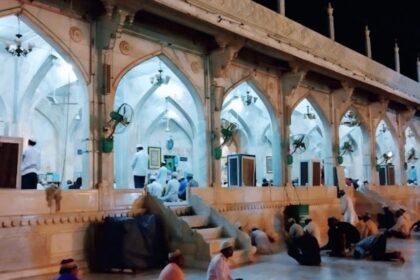
Behind the Sandal Khana Mosque at Ajmer Sharif is the Chilla Sharif (Hujra or spiritual cell) of Hazrat Baba Fariduddin Masood Ganj-e-Shakar (R.A.). According to tradition, Hazrat Baba Farid (R.A.) spent a period here in spiritual contemplation, worship, and seclusion.
- Hazrat Baba Fariduddin Masood Ganj-e-Shakar (R.A.)
- His Chilla Sharif at Ajmer Sharif and Spiritual Legacy
- Muharram at Ajmer Sharif — Opening of the Chilla Sharif
- Hazrat Khwaja Qutbuddin Bakhtiyar Kaki (R.A.) humbly replied:
- “What power do I have in your presence?”
- Hazrat Khwaja Moinuddin Chishty (R.A.) then declared:
- “He is your Mureed (disciple).”
- Hazrat Baba Fariduddin Ganj-e-Shakar (R.A.)
- Birth and Early Life
- Meeting with Hazrat Khwaja Qutbuddin Bakhtiyar Kaki (R.A.)
- Ghazni
- Baghdad Sharif
- Jerusalem
- Afghanistan
- Syria
- Iran
- Makkah Sharif
- Madinah Sharif
- Spiritual Journey and Sacred Relics
- Two flag-poles traditionally associated with the Prophet ﷺ
- A wooden bowl traditionally associated with the Prophet ﷺ
- A pair of scissors
- A turban
- Successor of Hazrat Khwaja Qutbuddin Bakhtiyar Kaki (R.A.)
- His Spiritual Striving — Mujahida and Chilla
- The Miracle of Sugar — Ganj-e-Shakar
- Hazrat Baba Farid (R.A.) simply replied:
- “Yes, it may be salt.”
- The saint then said:
- “If it is sugar, then it shall be sugar.”
- Compassion, Humility and Forgiveness
- His Love for the Prophet Muhammad ﷺ
- His Khanqah and Service to Humanity
- Traditional Accounts of His Karamat
- His Spiritual Successors and Disciples
- Among his most distinguished successors were:
- Baba Farid (R.A.) and Sikh Tradition
- The Chilla Sharif at Ajmer
- The Shrine of Hazrat Baba Farid (R.A.) at Pakpattan
- The shrine has two renowned entrances:
- Noori Darwaza
- Bahishti Darwaza
- His Passing — “Dost Ba Dost Pewast”
- The source further narrates that a Divine Voice was heard proclaiming:
- “Dost ba Dost Pewast.” “The Friend has merged into the Unity of the Friend.”
- The Kaffan of Hazrat Baba Farid (R.A.)
- Legacy of Hazrat Baba Farid Ganj-e-Shakar (R.A.)
- His spiritual legacy is associated with:
- Love of Allah
- Devotion to the Prophet Muhammad ﷺ
- Strict adherence to Shari’ah
- Spiritual purification
- Mujahida and control of the Nafs
- Humility and patience
- Compassion and forgiveness
- Service to the poor and needy
- Detachment from worldly pleasures
- Zikr and worship
- Spiritual education and guidance
The entrance to the Chilla Sharif traditionally remains closed throughout the year, except for three days—from 4th Muharram Sharif to 6th Muharram Sharif. During these sacred days, the Chilla Sharif is opened for Ziyarat to devotees.
The Spiritual Connection of Hazrat Khwaja Moinuddin Chishty (R.A.), Hazrat Khwaja Qutbuddin Bakhtiyar Kaki (R.A.) and Baba Farid (R.A.)
According to the traditional account, Hazrat Khwaja Moinuddin Hasan Chishty (R.A.) and Hazrat Khwaja Qutbuddin Bakhtiyar Kaki (R.A.) were together in the Hujra where Hazrat Baba Farid (R.A.) was engaged in spiritual exercises.
Hazrat Khwaja Moinuddin Chishty (R.A.) is narrated to have said to Hazrat Khwaja Qutbuddin Bakhtiyar Kaki (R.A.):
“O Bakhtiyar, how much longer will you subject this young man, Farid, to such rigorous spiritual exercises? You should reward him with something.”
Hazrat Khwaja Qutbuddin Bakhtiyar Kaki (R.A.) humbly replied:
“What power do I have in your presence?”
Hazrat Khwaja Moinuddin Chishty (R.A.) then declared:
“He is your Mureed (disciple).”
He then stood and suggested that they both bestow their blessings upon Hazrat Baba Farid (R.A.).
Hazrat Khwaja Moinuddin Chishty (R.A.) stood on the right, Hazrat Khwaja Qutbuddin Bakhtiyar Kaki (R.A.) on the left, and Hazrat Baba Farid (R.A.) stood between them. They then bestowed upon him the spiritual blessings they had received.
The traditional account expresses the significance of this moment in these words:
“The two saints have bestowed the two worlds upon you. You have received kingship from these kings of the age. The realms of this world and the Hereafter belong to you. Indeed, the entire creation has been entrusted to you.”
Hazrat Baba Fariduddin Ganj-e-Shakar (R.A.)
Hazrat Baba Fariduddin Masood Ganj-e-Shakar (R.A.) occupies a distinguished position in the Chishtiyya Silsila and is remembered as one of its most influential saints and spiritual masters.
According to the traditional accounts presented in the source, he was a descendant of Hazrat Umar Farooq-e-Azam (R.A.), the second Caliph of Islam. His father, Shaikh Jamaluddin Sulaiman, is said to have migrated from Ghazni and later lived in the region of present-day Pakistan.
Birth and Early Life
According to one traditional account, Hazrat Baba Farid (R.A.) was born on 29th Sha’ban, 569 A.H., in Khotwal, a village near Lahore.
A miraculous incident is traditionally associated with his birth. During his mother’s pregnancy, she once desired to pluck plums from a neighbour’s tree without permission. At that moment, she experienced severe pain and abandoned the intention. Years later, she narrated the incident to her son. Hazrat Baba Farid (R.A.) is said to have explained that the pain had prevented her from taking something without the owner’s permission.
This account is traditionally presented as an early indication of his spiritual station and his deep concern for what is lawful and unlawful.
At the age of seven, he completed his early religious education in Khotwal and was subsequently sent to Multan for higher studies. He stayed at a mosque and studied the Holy Qur’an, Hadith, Fiqh, Philosophy and Logic under the guidance of Maulana Minhajuddin. According to the source, he memorised the Holy Qur’an at an early age and later became an accomplished Islamic scholar.
Meeting with Hazrat Khwaja Qutbuddin Bakhtiyar Kaki (R.A.)
During Hazrat Baba Farid’s studies in Multan, Hazrat Khwaja Qutbuddin Bakhtiyar Kaki (R.A.) visited the city. Impressed by the young Baba Farid’s spiritual qualities and learning, he accepted him as his Mureed and introduced him into the Chishtiyya spiritual tradition.
Under the instruction of his Pir-o-Murshid, Hazrat Baba Farid (R.A.) undertook an extensive journey through various Islamic lands.
According to the source, from approximately 593 A.H. to 611 A.H., he travelled for nearly eighteen years through places including:
Ghazni
Baghdad Sharif
Jerusalem
Afghanistan
Syria
Iran
Makkah Sharif
Madinah Sharif
During these travels, he met numerous distinguished scholars, saints and Sufis.
Spiritual Journey and Sacred Relics
It is traditionally narrated that while Hazrat Baba Farid (R.A.) was in Madinah Sharif performing Hajj, he received a spiritual instruction to travel to Baghdad Sharif and meet Hazrat Abdul Wahab, son of Hazrat Ghaus-ul-Azam Sheikh Abdul Qadir Jilani (R.A.).
Upon reaching Baghdad, he is said to have received sacred relics associated with the Prophet Muhammad ﷺ, including:
Two flag-poles traditionally associated with the Prophet ﷺ
A wooden bowl traditionally associated with the Prophet ﷺ
A pair of scissors
A turban
These relics are described in the source as part of the spiritual heritage transmitted among the saints.
After approximately eighteen years of travel, Hazrat Baba Farid (R.A.) returned to Delhi and reunited with his Pir-o-Murshid, Hazrat Khwaja Qutbuddin Bakhtiyar Kaki (R.A.).
Successor of Hazrat Khwaja Qutbuddin Bakhtiyar Kaki (R.A.)
After the passing of Hazrat Khwaja Qutbuddin Bakhtiyar Kaki (R.A.), the spiritual responsibility of the Chishtiyya Silsila was entrusted to Hazrat Baba Farid (R.A.).
Because of political circumstances in Delhi, Hazrat Baba Farid (R.A.) eventually moved the centre of the Chishtiyya mission to Ajodhan, later known as Pakpattan.
His Khanqah became a renowned centre of spiritual and moral education. Scholars, Dervishes, Sufis and spiritual seekers travelled from different parts of India to benefit from his teachings and companionship.
From Ajodhan, many disciples and spiritual representatives travelled to different regions to spread the teachings of Islam and the Chishtiyya tradition.
His Spiritual Striving — Mujahida and Chilla
Hazrat Baba Farid (R.A.) became renowned for his extraordinary Mujahida, meaning rigorous spiritual striving and discipline of the Nafs.
One of the most famous traditional accounts concerns the Chilla-e-Maakoos, a forty-day spiritual retreat. According to the narration, Hazrat Khwaja Qutbuddin Bakhtiyar Kaki (R.A.) instructed Baba Farid (R.A.) to undertake this exceptionally difficult spiritual exercise in a well, suspended in an inverted position with his feet tied to a strong branch.
Such accounts illustrate the extraordinary degree of spiritual discipline traditionally associated with Hazrat Baba Farid (R.A.).
Another narration describes a time when, weakened by his spiritual exercises, he attempted to support himself with a staff. Feeling that his dependence upon anything other than Allah weakened his spiritual reliance, he discarded the staff.
The Miracle of Sugar — Ganj-e-Shakar
One of the most famous traditions associated with Hazrat Baba Farid (R.A.) explains the origin of his title “Ganj-e-Shakar,” meaning “Treasure of Sugar.”
It is narrated that a merchant was travelling from Multan towards Delhi with camels carrying bags of sugar. While passing through Ajodhan, Hazrat Baba Farid (R.A.) casually asked him what he was carrying.
The merchant, apparently speaking sarcastically, replied that the bags contained salt.
Hazrat Baba Farid (R.A.) simply replied:
“Yes, it may be salt.”
When the merchant reached Delhi, he discovered that the sugar had indeed turned into salt. He returned to Ajodhan and apologised to Hazrat Baba Farid (R.A.).
The saint then said:
“If it is sugar, then it shall be sugar.”
The merchant returned to Delhi and, according to the traditional account, found that the salt had once again become sugar.
Because of this and similar traditions, Hazrat Baba Farid (R.A.) became renowned by the title Ganj-e-Shakar.
Compassion, Humility and Forgiveness
Hazrat Baba Farid (R.A.) was renowned for his humility, patience, kindness and forgiveness.
One traditional account tells of a soldier who approached him with the intention of killing him. Hazrat Baba Farid (R.A.) did not respond with anger. Instead, he gently reminded the man that he had caused him no harm and asked why he would kill a Dervish and incur the displeasure of Allah.
The man abandoned his intention, and Baba Farid (R.A.) forgave and embraced him.
His humility was also reflected in his dealings with visitors. Despite his profound learning and spiritual knowledge, he is traditionally described as avoiding anything that might humiliate or embarrass another person.
He emphasised adherence to Shari’ah, spiritual discipline, detachment from worldly pleasures, remembrance of Allah, love of the Prophet Muhammad ﷺ, and service to humanity.
His Love for the Prophet Muhammad ﷺ
Hazrat Baba Farid (R.A.) is traditionally remembered for his profound love and devotion to the Prophet Muhammad ﷺ.
Whenever the noble character and life of the Beloved Prophet ﷺ were mentioned, he would become deeply emotional and, according to the accounts, would often weep out of love and reverence.
His life reflected the Chishti emphasis on love of Allah, devotion to the Prophet ﷺ, humility, spiritual purification and service to humanity.
His Khanqah and Service to Humanity
Hazrat Baba Farid (R.A.) is described as maintaining a life of simplicity and devotion. Whatever he received was used in the service of Allah and for the benefit of those in need.
His Khanqah at Ajodhan became a centre where travellers, scholars, Dervishes, seekers and the poor could find spiritual guidance and hospitality.
His teachings emphasised that spiritual advancement is not merely achieved through knowledge, but through purification of the heart, control of the Nafs, obedience to Allah, compassion towards creation and sincere service to humanity.
Traditional Accounts of His Karamat
Numerous Karamat (spiritual miracles) are traditionally attributed to Hazrat Baba Farid (R.A.).
Among the accounts preserved in the source is the story of a devotee named Muhammad Nishapuri, who was travelling towards Delhi with companions when they were confronted by robbers in a jungle.
Having no means of defending themselves, Muhammad Nishapuri remembered his Pir, Hazrat Baba Farid (R.A.), and prayed to Allah for assistance. According to the traditional account, the robbers suddenly abandoned their weapons, apologised and departed without harming the travellers.
Another account tells of poor travellers from Arabia who arrived at Baba Farid’s Khanqah after exhausting their money during their journey. Hazrat Baba Farid (R.A.) gave them some dates and told them to continue their journey with trust in Allah.
Although they initially considered the gift insufficient, the dates are traditionally said to have turned into gold. The travellers returned with gratitude and prayed for the saint.
Such narratives are traditionally regarded as expressions of the spiritual blessings and Karamat associated with Hazrat Baba Farid (R.A.).
His Spiritual Successors and Disciples
Hazrat Baba Farid (R.A.) left behind numerous Khulafa (spiritual successors) who carried forward the Chishtiyya tradition.
Among his most distinguished successors were:
Hazrat Sheikh Alauddin Sabir Kaliyari (R.A.), associated with the Sabiriyya branch of the Chishtiyya Silsila.
Hazrat Khwaja Nizamuddin Auliya Mehboob-e-Ilahi (R.A.), the great spiritual master of Delhi and founder of the Nizamiyya branch.
Hazrat Nizamuddin Auliya (R.A.) became one of his most celebrated disciples and successors. Under his guidance, the Chishtiyya Silsila reached a remarkable height of spiritual influence.
Hazrat Nizamuddin Auliya (R.A.) later became the spiritual master of Hazrat Amir Khusrau (R.A.), among other distinguished disciples.
Baba Farid (R.A.) and Sikh Tradition
Hazrat Baba Farid (R.A.) also holds an important place in the spiritual and literary history of the Indian subcontinent.
His verses are preserved in the Guru Granth Sahib, where they appear among the sayings attributed to Farid. This reflects the wider historical influence of his spiritual poetry and teachings across religious communities.
The Chilla Sharif at Ajmer
The Chilla Sharif of Hazrat Baba Farid Ganj-e-Shakar (R.A.) at Ajmer Sharif remains an important place associated with his spiritual journey.
Traditionally, the Chilla is regarded as the place where Hazrat Baba Farid (R.A.) engaged in spiritual contemplation and seclusion.
The Chilla Sharif is traditionally opened for Ziyarat for three days during Muharram Sharif—from the 4th to the 6th of Muharram.
Devotees visit the sacred place during these days to offer respect, perform Ziyarat and remember the spiritual legacy of Hazrat Baba Farid (R.A.).
The Shrine of Hazrat Baba Farid (R.A.) at Pakpattan
The Mazar Sharif of Hazrat Baba Fariduddin Ganj-e-Shakar (R.A.) is situated in Pakpattan, Pakistan, and is regarded as one of the most important spiritual centres associated with the Chishtiyya Silsila.
According to the source, the tomb was constructed by Hazrat Khwaja Nizamuddin Auliya (R.A.).
The shrine has two renowned entrances:
Noori Darwaza
Bahishti Darwaza
The Bahishti Darwaza is traditionally opened once a year during the annual Urs, when large numbers of devotees pass through it.
The shrine attracts devotees from Pakistan and many other parts of the world.
The annual commemoration of Hazrat Baba Farid (R.A.) is observed on 5th Muharram Sharif.
His Passing — “Dost Ba Dost Pewast”
According to the traditional account, Hazrat Baba Farid (R.A.) remained deeply absorbed in worship and remembrance during the final days of his life.
On the 5th of Muharram Sharif, during the Isha prayer, he entered Sajdah and recited:
“Ya Hayyu, Ya Qayyum.” O Ever-Living, O Self-Subsisting.
With these words upon his lips, he passed from this world into the eternal mercy of Allah.
The source further narrates that a Divine Voice was heard proclaiming:
“Dost ba Dost Pewast.” “The Friend has merged into the Unity of the Friend.”
This expression symbolically represents the saint’s passing from the temporal world into the eternal presence and mercy of Allah.
The Kaffan of Hazrat Baba Farid (R.A.)
A traditional account states that an elderly woman who was among the devotees of Hazrat Baba Farid (R.A.) presented a piece of cloth for his Kaffan (shroud).
She explained that she had spun every thread of the cloth while maintaining Wudu and had originally prepared it for her own burial. She requested that it be accepted for the Kaffan of the saint, hoping that Allah would grant her forgiveness and salvation through her devotion.
According to the narration, Hazrat Baba Farid’s son accepted the cloth for his father’s Kaffan.
Legacy of Hazrat Baba Farid Ganj-e-Shakar (R.A.)
Hazrat Baba Fariduddin Masood Ganj-e-Shakar (R.A.) remains one of the most revered figures of the Chishtiyya Silsila.
His spiritual legacy is associated with:
Love of Allah
Devotion to the Prophet Muhammad ﷺ
Strict adherence to Shari’ah
Spiritual purification
Mujahida and control of the Nafs
Humility and patience
Compassion and forgiveness
Service to the poor and needy
Detachment from worldly pleasures
Zikr and worship
Spiritual education and guidance
His principal spiritual successors carried his teachings across the Indian subcontinent, helping establish the Chishtiyya tradition as one of the most influential Sufi traditions of South Asia.
His Mazar Sharif at Pakpattan and his Chilla Sharif at Ajmer Sharif continue to be associated with his enduring spiritual memory and legacy.