
Hazrat Bu-Ali Shah Qalandar (R.A.) – The Ecstatic Saint of Panipat
Hazrat Shaikh Sharfuddin Bu-Ali Shah Qalandar (R.A.)
Panipat Sharif, Haryana, India
Hazrat Shaikh Sharfuddin Bu-Ali Shah Qalandar (R.A.) was a distinguished Sufi saint and spiritual personality associated with the Chishti tradition. His personal name was Shaikh Sharfuddin, while Bu-Ali Shah Qalandar became his revered title.
- Hazrat Shaikh Sharfuddin Bu-Ali Shah Qalandar (R.A.)
- Panipat Sharif, Haryana, India
- Education and Scholarship
- Absorbed in Spiritual Contemplation
- Prayer, Meditation and Spiritual Experiences
- One day, while he was engaged in meditation, he heard a voice saying:
- “Sharfuddin, We have granted your prayer. Tell Us, what do you desire?”
- His Life and Service in Panipat
- A Spiritual Revelation
- “The lion should live in the jungle.”
- Passing and Dargah Sharif
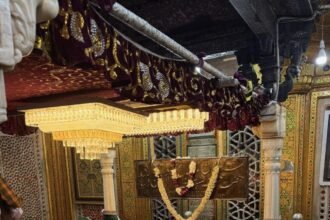
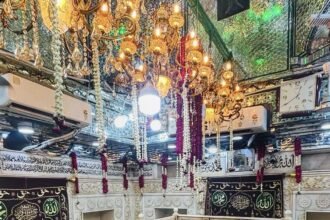
- Roza Sharif of Hazrat Bu-Ali Shah Qalandar (R.A.)
- Panipat, Haryana, India
His father, Shaikh Fakhruddin, was a renowned scholar and saint of his time. His mother, Bibi Hafiza Jamal, was the daughter of Maulana Syed Nematullah Hamdani. According to the traditional account, his father migrated from Iraq to Panipat in 600 AH. His lineage is described as tracing through several generations to Hazrat Imam Abu Hanifa (R.A.).
Hazrat Bu-Ali Shah Qalandar (R.A.) was born in 606 AH in Panipat.
Education and Scholarship
Hazrat Sharfuddin (R.A.) completed his education at a young age and became a distinguished teacher and scholar. He spent approximately twenty years teaching near the Qutub Minar in Delhi.
He was counted among the accomplished scholars of his era, and his knowledge and teaching were held in high regard by other learned personalities.
Absorbed in Spiritual Contemplation
During the course of his studies, Hazrat Bu-Ali Shah Qalandar (R.A.) experienced a profound state of spiritual absorption and contemplation. According to the traditional account, he became so detached from worldly learning that he gathered his books, threw them into a river, and withdrew into the forest.
There, he devoted himself completely to prayer, meditation, and spiritual discipline.
Prayer, Meditation and Spiritual Experiences
Hazrat Bu-Ali Shah Qalandar (R.A.) undertook intense spiritual exercises and prolonged periods of meditation. It is traditionally narrated that he remained immersed in water for several days in a state of spiritual absorption, enduring severe physical hardship.
One day, while he was engaged in meditation, he heard a voice saying:
“Sharfuddin, We have granted your prayer. Tell Us, what do you desire?”
He replied that he desired nothing except the Divine Presence and that he wished to surrender his life completely in the love of Allah.
The voice then instructed him to leave the water, saying that he still had much spiritual work to accomplish. Hazrat Bu-Ali Shah Qalandar (R.A.), remaining absorbed in divine love, replied that he would not leave the river of love unless he was taken out by Divine command.
According to the traditional narration, he subsequently witnessed a spiritually radiant saint who appeared before him, lifted him from the river, and placed him upon the bank.
Several chroniclers have traditionally identified this spiritual figure with Hazrat Ali (Karramallahu Wajhahu). It is narrated that Hazrat Ali (R.A.) imparted certain spiritual secrets to him before disappearing.
From this period onward, Hazrat Sharfuddin (R.A.) became increasingly absorbed in spiritual contemplation. His heart was said to have become illuminated with divine light, and he came to be known by the revered title Bu-Ali Shah.
Different historical and spiritual traditions offer varying accounts of his spiritual lineage. Some narrations state that he was directly admitted into the spiritual fold by Hazrat Ali (R.A.), while others associate his spiritual connections with Hazrat Khwaja Nizamuddin Auliya (R.A.), Hazrat Khwaja Qutbuddin Bakhtiyar Kaki (R.A.), or Shaikh Shahabuddin Suhrawardi (R.A.).
His Life and Service in Panipat
Hazrat Bu-Ali Shah Qalandar (R.A.) spent the greater part of his life in Panipat, where he served the people and became a source of spiritual guidance for countless individuals.
People from different walks of life came to him seeking spiritual counsel, blessings, and guidance. According to traditional accounts, many people benefited from his teachings and spiritual presence.
He also devoted himself to religious teaching and the propagation of Islam. It is narrated that numerous people embraced Islam through his influence and guidance, including communities living in the surrounding regions.
His spiritual influence also reached members of the royal establishment of Delhi, whom he is said to have advised regarding good character, righteous conduct, justice, and moral responsibility.
A Spiritual Revelation
A traditional account relates an extraordinary incident involving a disciple of Hazrat Hafiz Shamsuddin Turk Panipati (R.A.).
The disciple once travelled into the city and reportedly witnessed Hazrat Bu-Ali Shah Qalandar (R.A.) riding upon a lion. When he returned and described the incident to his teacher, Hazrat Shamsuddin Turk (R.A.) instructed him to convey a message:
“The lion should live in the jungle.”
The disciple returned to Hazrat Bu-Ali Shah Qalandar (R.A.) and delivered his teacher’s message. According to the narration, Hazrat Bu-Ali Shah immediately arose and departed for Ghote.
This account is traditionally remembered among the extraordinary spiritual episodes associated with his life.
Passing and Dargah Sharif
According to Sair-ul-Aqtab, Hazrat Shaikh Sharfuddin Bu-Ali Shah Qalandar (R.A.) passed away on 17 Ramadan 724 AH at Budha Khera.
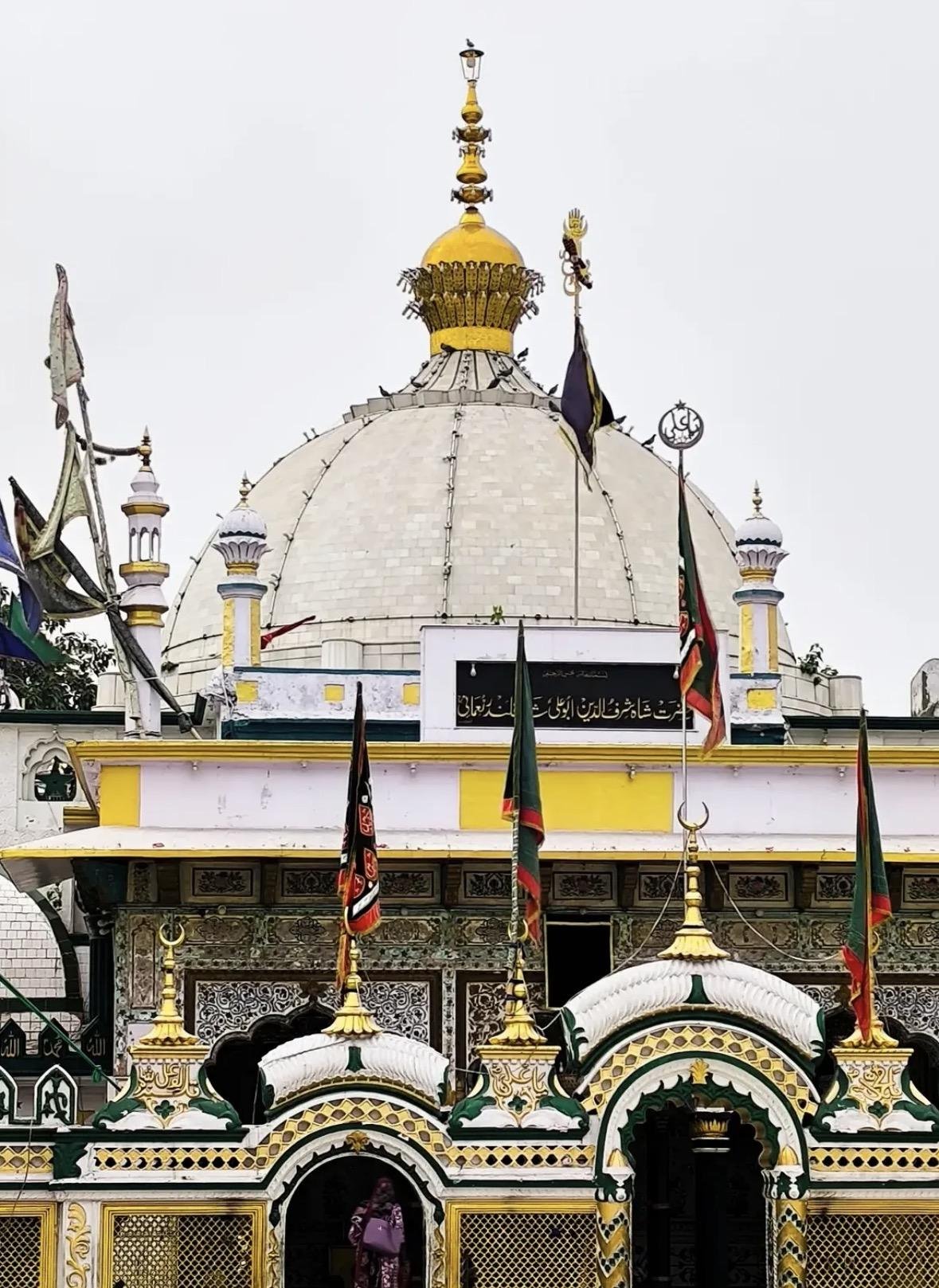
His blessed body was subsequently laid to rest in Panipat, where his Dargah Sharif became an important centre of spiritual devotion.
Roza Sharif of Hazrat Bu-Ali Shah Qalandar (R.A.)
Panipat, Haryana, India
For centuries, devotees have visited the sacred shrine of Hazrat Bu-Ali Shah Qalandar (R.A.) to offer Fatiha, Dua, and their respects, and to remember the spiritual legacy of one of the revered Sufi personalities associated with Panipat.